Recipe
Cuban Capitolios with Toasted Meringue
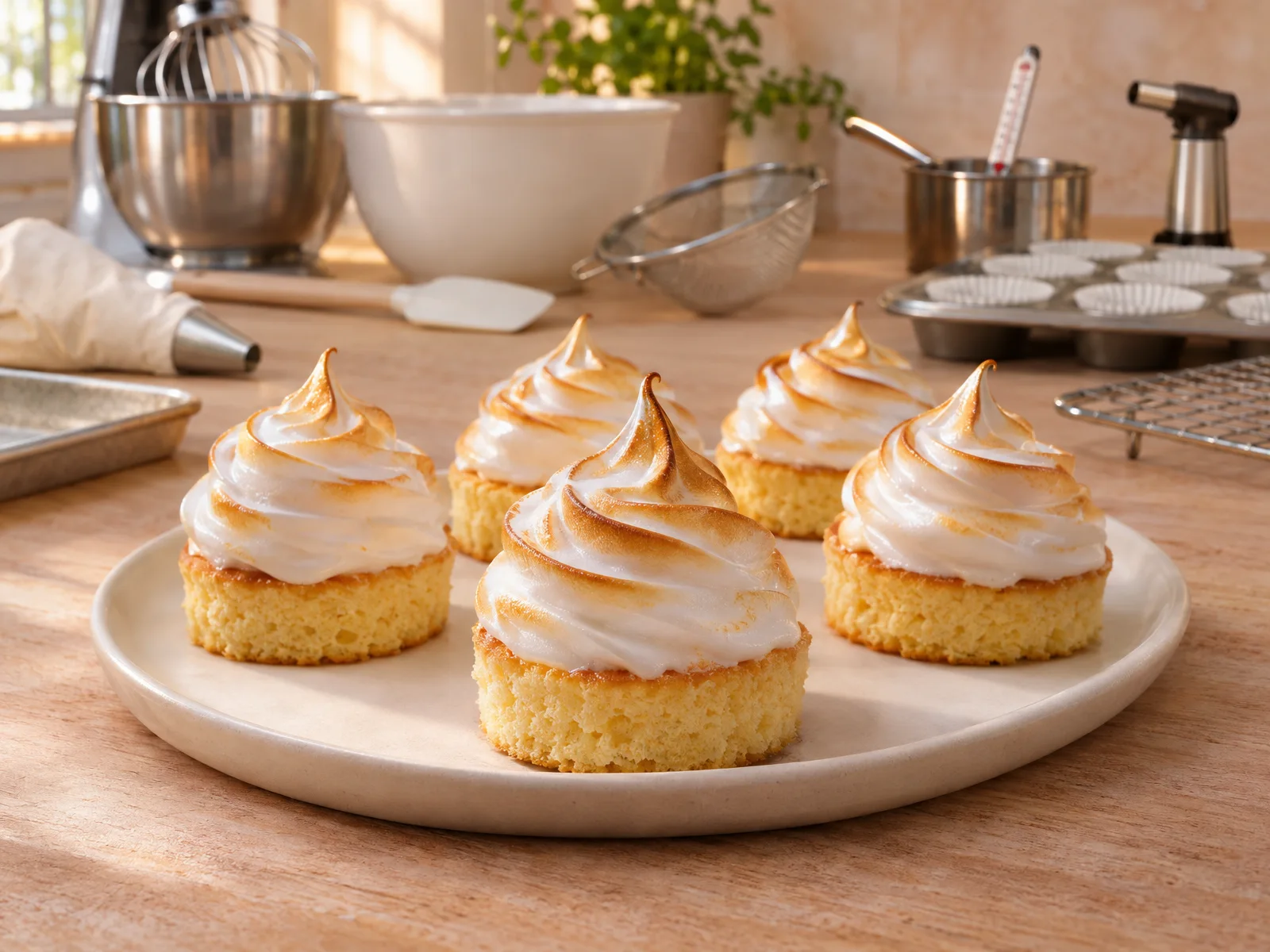
Vanilla panetela with a dome of Italian meringue lightly browned with a torch or broiler: a homemade variant of Cuban capitolios.
- Preparation40 min
- Cooking35 min
- Total time2 h
- Servings12 small capitolios
- DifficultyMedium
These capitolios maintain the light base of vanilla panetela and the generous dome of meringue, with a lightly toasted finish that enhances the aroma of the topping.
The meringue remains soft inside and golden on the swirls and tip. You can achieve this finish with a kitchen torch or the oven broiler, watching it closely for a few moments.
The recipe yields twelve small sweets. Prepare the bases in advance so they are completely cool before placing the meringue.
Ingredients
Check off the ingredients you have.
For the 12 panetela bases
For the Italian meringue
To moisten the bases, optional
Method
Prepare the panetela
- Preheat the oven to 175 °C, with top and bottom heat and no fan. Place paper liners in a 12-cavity muffin tin, about 6–7 cm in diameter at the opening. Prepare a rack, a piping bag with a wide tip, and a syrup thermometer. For the finish, you will need a culinary torch or an oven with a broiler, plus a suitable metal tray.
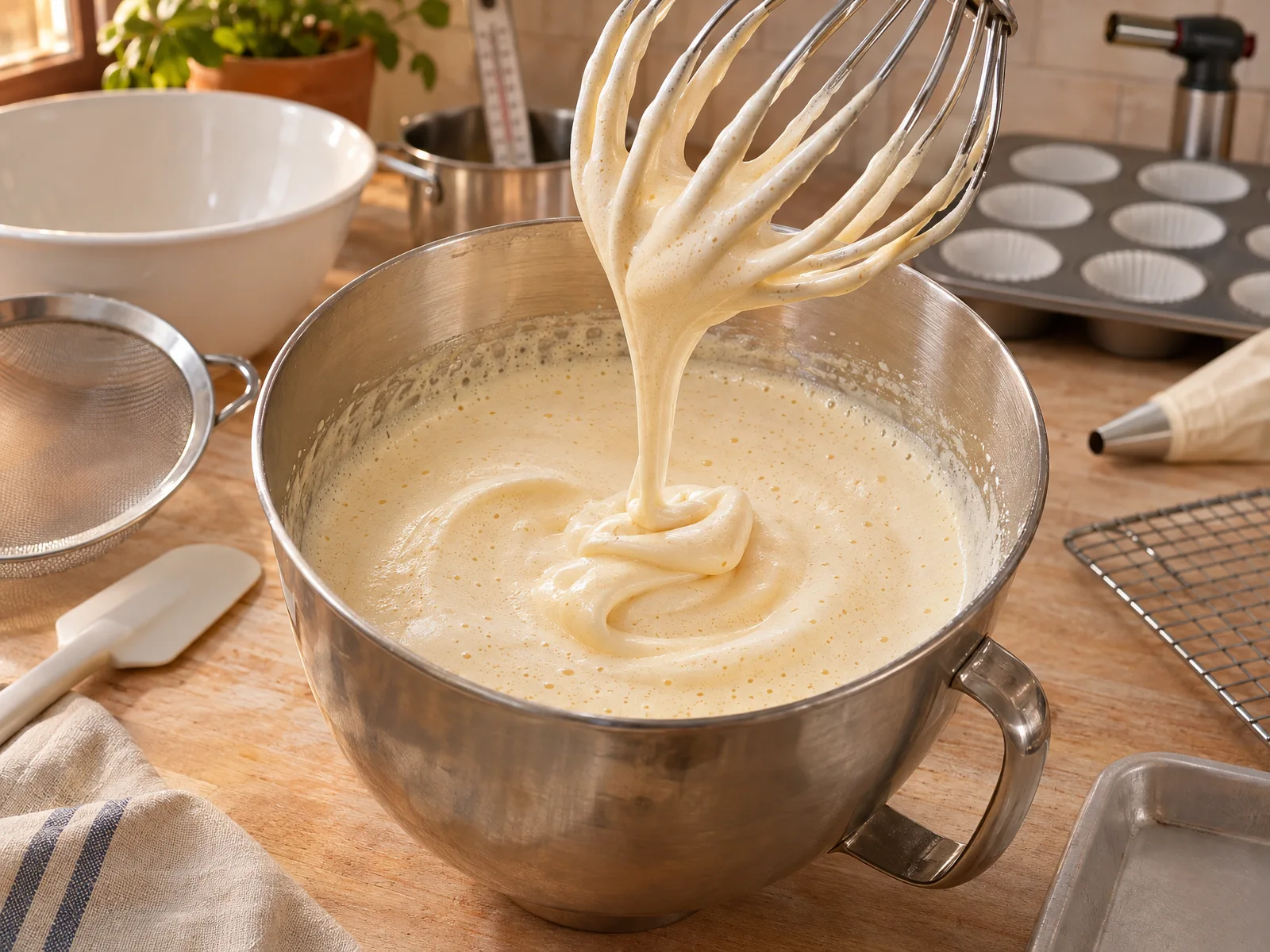
- Beat the 3 eggs with the 90 g sugar and vanilla for about 8–10 minutes, until you obtain a clear, very airy and thick mixture. When lifting the beaters, a ribbon should fall that remains on the surface for a few seconds.
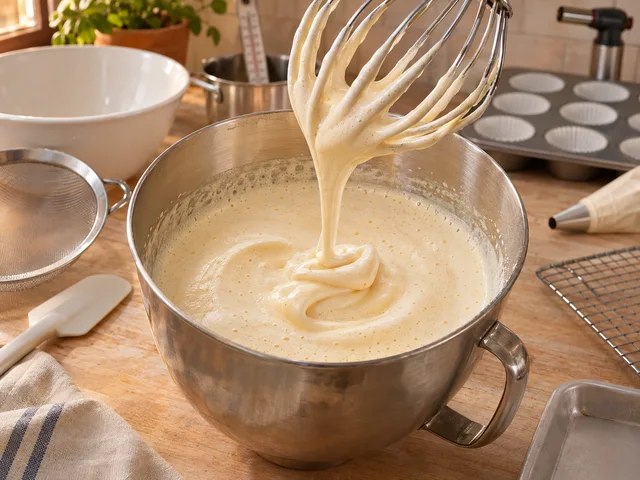
Image generated with AI.CiberCuba - Sift the 90 g flour with the salt. Incorporate it in two batches with a spatula using folding motions, reaching the bottom of the bowl. Stop when no flour remains: this panetela rises thanks to the air from the beating.
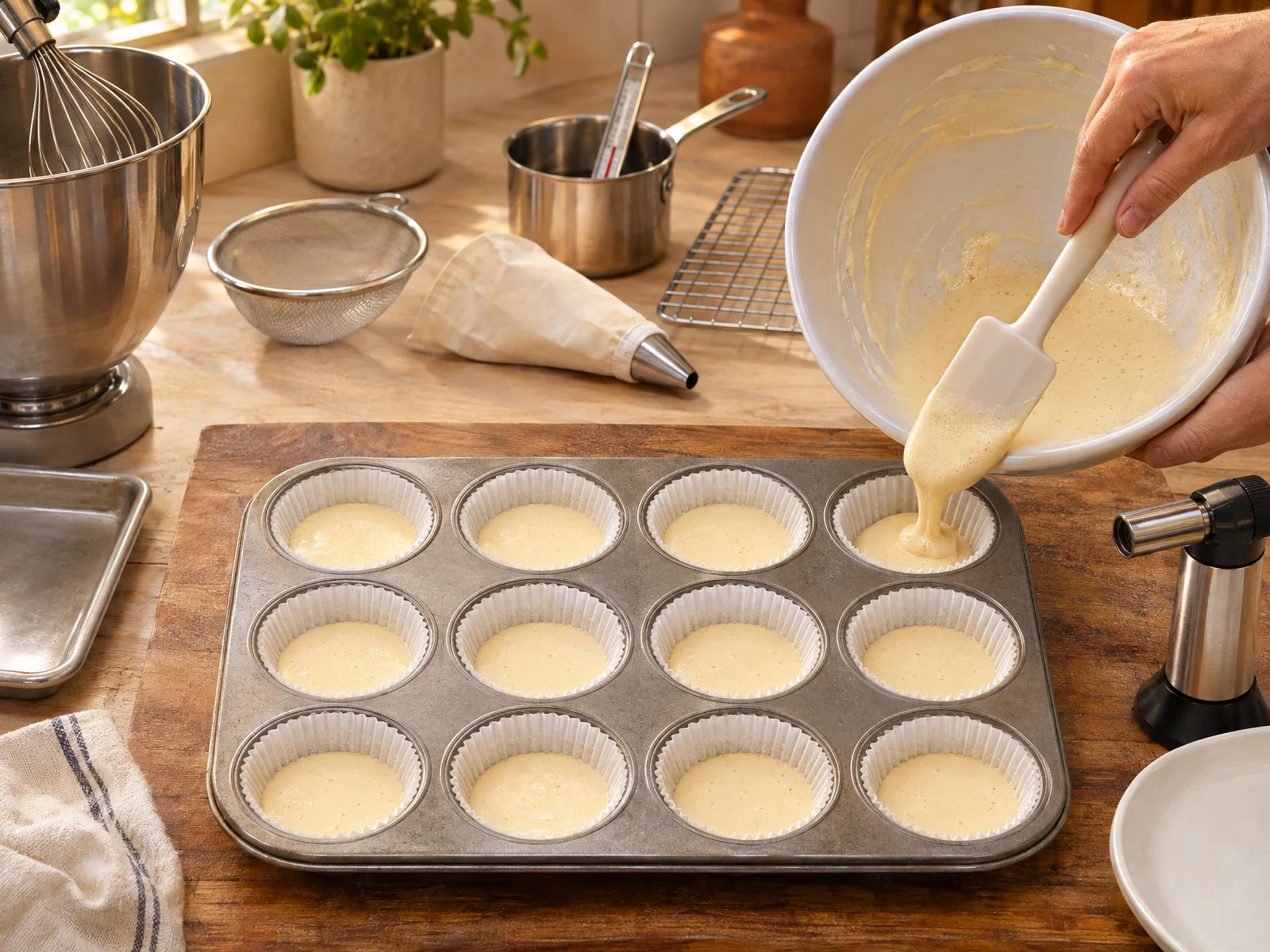
- Distribute the batter evenly among the 12 cavities, approximately 27–28 g in each. You will bake small and low bases. Start checking at 12–15 minutes and remove them when they are lightly golden, regain their shape when touched gently, and a skewer comes out clean; depending on the tin and oven, they may need up to about 20 minutes.
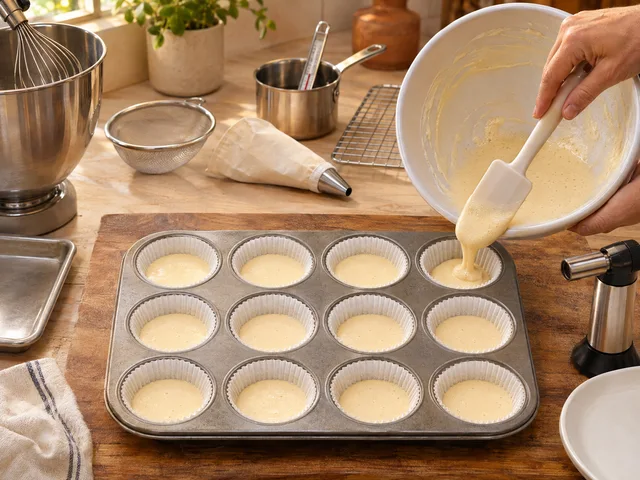
Image generated with AI.CiberCuba - Let the bases rest in the tin for 5 minutes and transfer them to a rack. Wait until they are completely cool, approximately 30 more minutes, before carefully removing the liners and placing the meringue.
Optional light syrup for the bases
- If you desire a slightly juicier base, heat the 30 g sugar with the 45 ml water only until the sugar dissolves. Let cool. Lightly brush the surface of the cold panetelas, using at most one teaspoon per unit, without soaking them. The yield of the syrup will depend on evaporation.
Prepare the Italian meringue
- Check that the pasteurized egg whites are suitable for whipping. Place them in the clean, grease-free bowl of an electric mixer, with the cream of tartar if you use it. In a small saucepan, mix the 300 g sugar with the 90 ml water. Heat until boiling and stop stirring once boiling begins.
- While the syrup heats, start beating the egg whites until they form soft peaks. Control the temperature with the thermometer, without the probe touching the bottom of the saucepan, and adjust the heat so both preparations are ready at the same time. Remove the syrup when it reaches 118–120 °C. The egg whites must be whipped before incorporating it; if they advance too quickly, keep the electric mixer on low speed while the syrup finishes reaching its point.
- Remove the syrup from the heat. With the electric mixer on medium-low speed, pour it slowly in a thin stream between the beaters and the wall of the bowl, avoiding letting it fall on the beaters and splash. Handle the saucepan with care: the syrup is very hot.
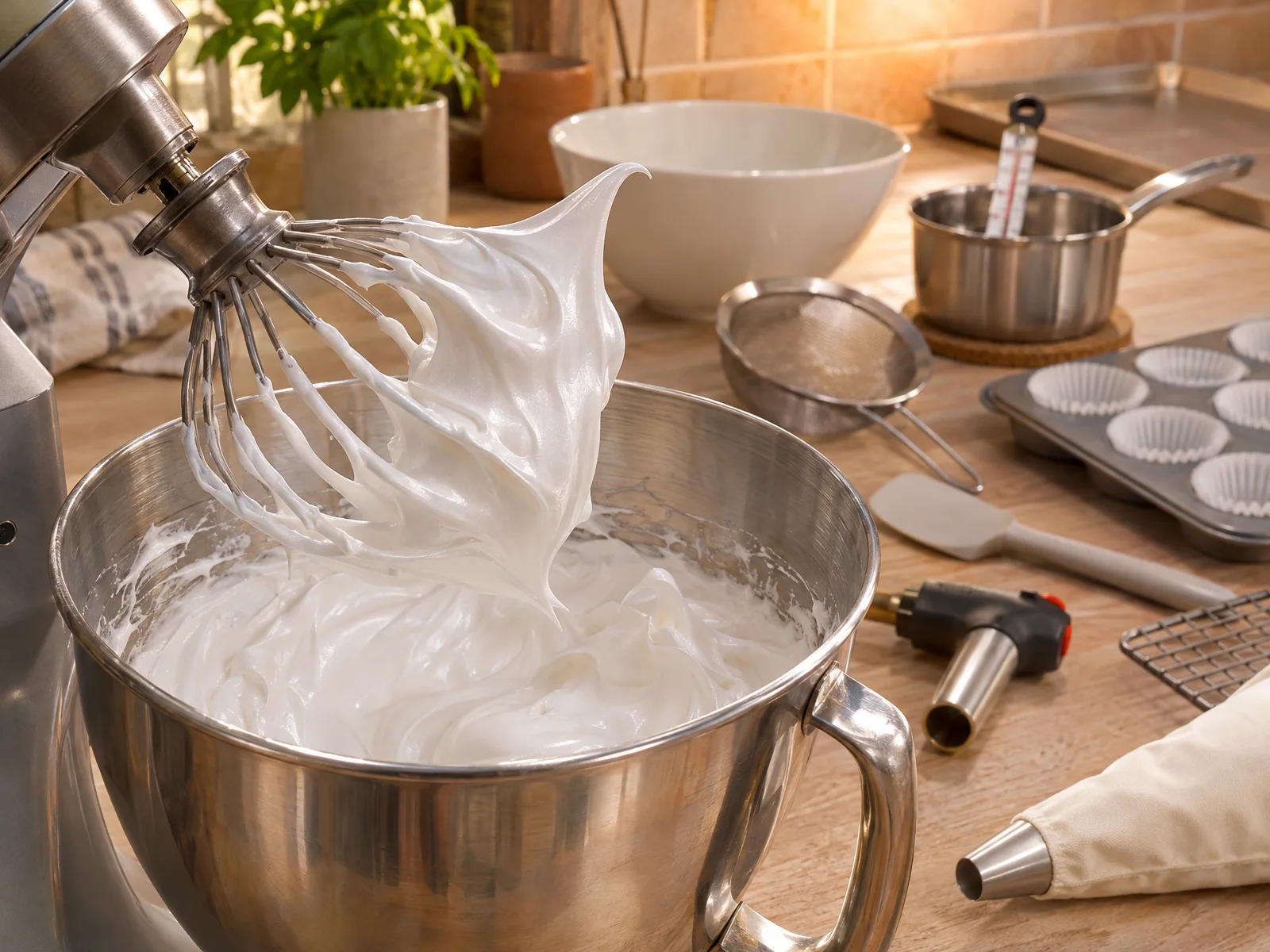
- When you have incorporated all the syrup, increase to medium-high speed and beat until you obtain a shiny, firm meringue that is barely warm, approximately 8–12 minutes depending on the electric mixer. It must hold a peak and keep its shape. The use of pasteurized egg whites is part of this recipe: the temperature of the syrup does not by itself guarantee the temperature of the entire mixture.
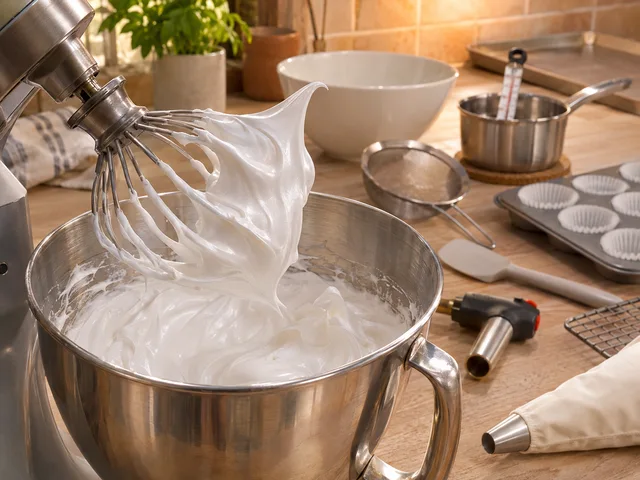
Image generated with AI.CiberCuba
Pipe and toast the meringue
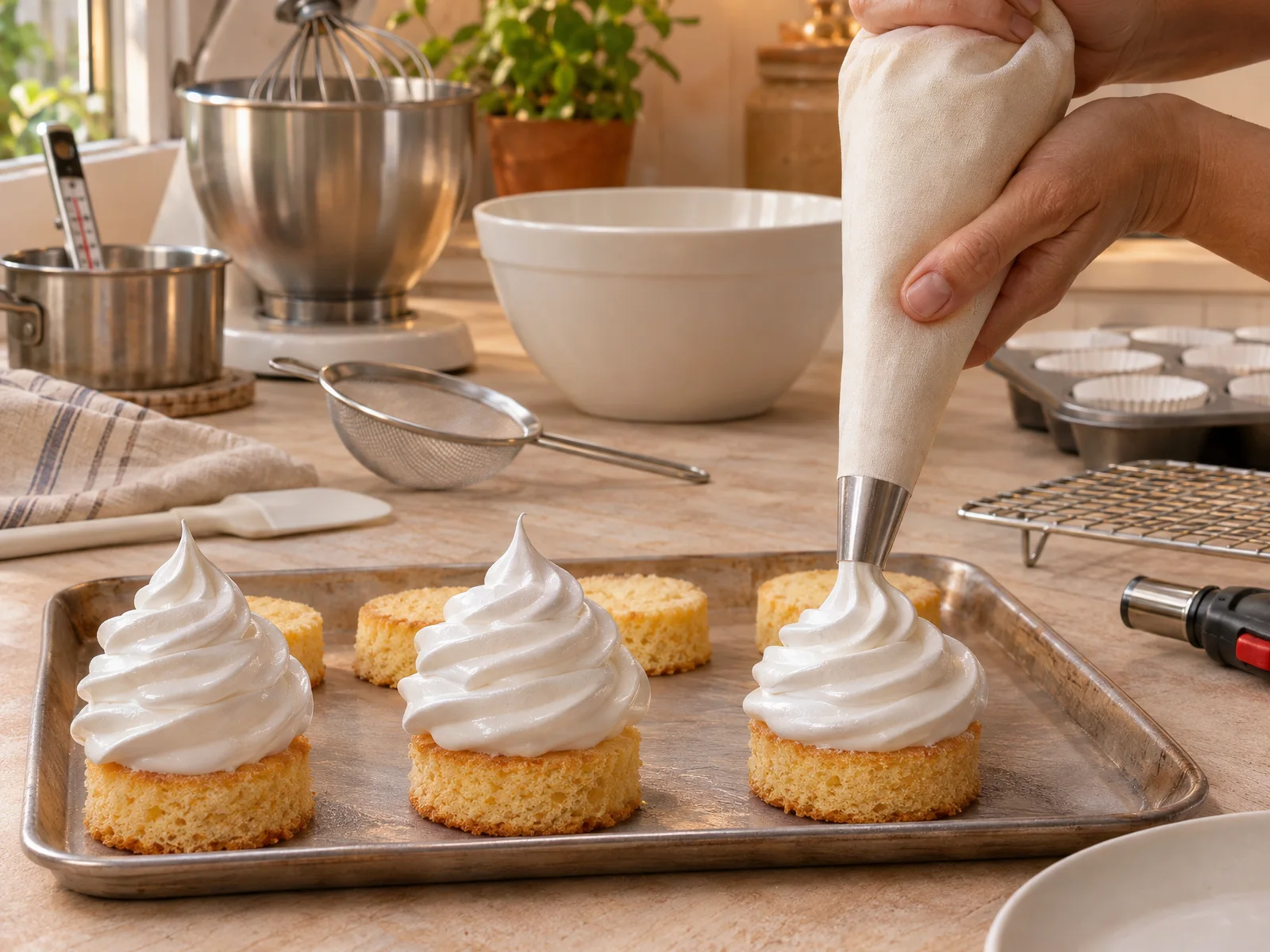
- Transfer the firm, barely warm meringue to a piping bag with a wide tip. On each completely cool base, form a tall spiral: start at the edge and draw increasingly smaller swirls until finishing in a point. Distribute the meringue among the 12 pieces.
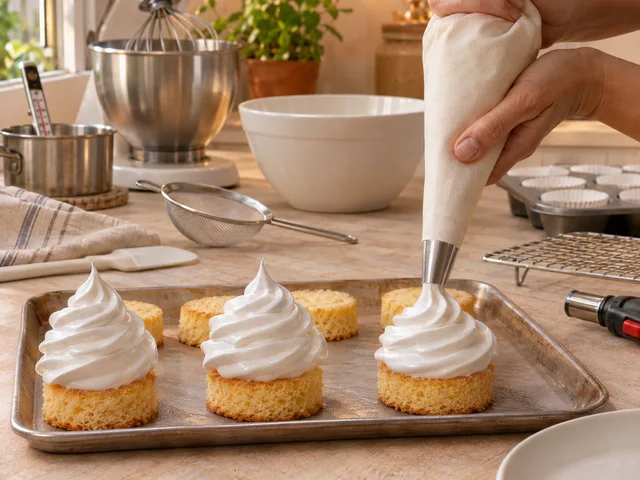
Image generated with AI.CiberCuba - Refrigerate the capitolios for 15 minutes so they are well chilled before browning. Check that you have removed all paper liners. Place them on a metal tray suitable for broiling, without parchment paper, plastic or decorations, and choose one of the two following methods.
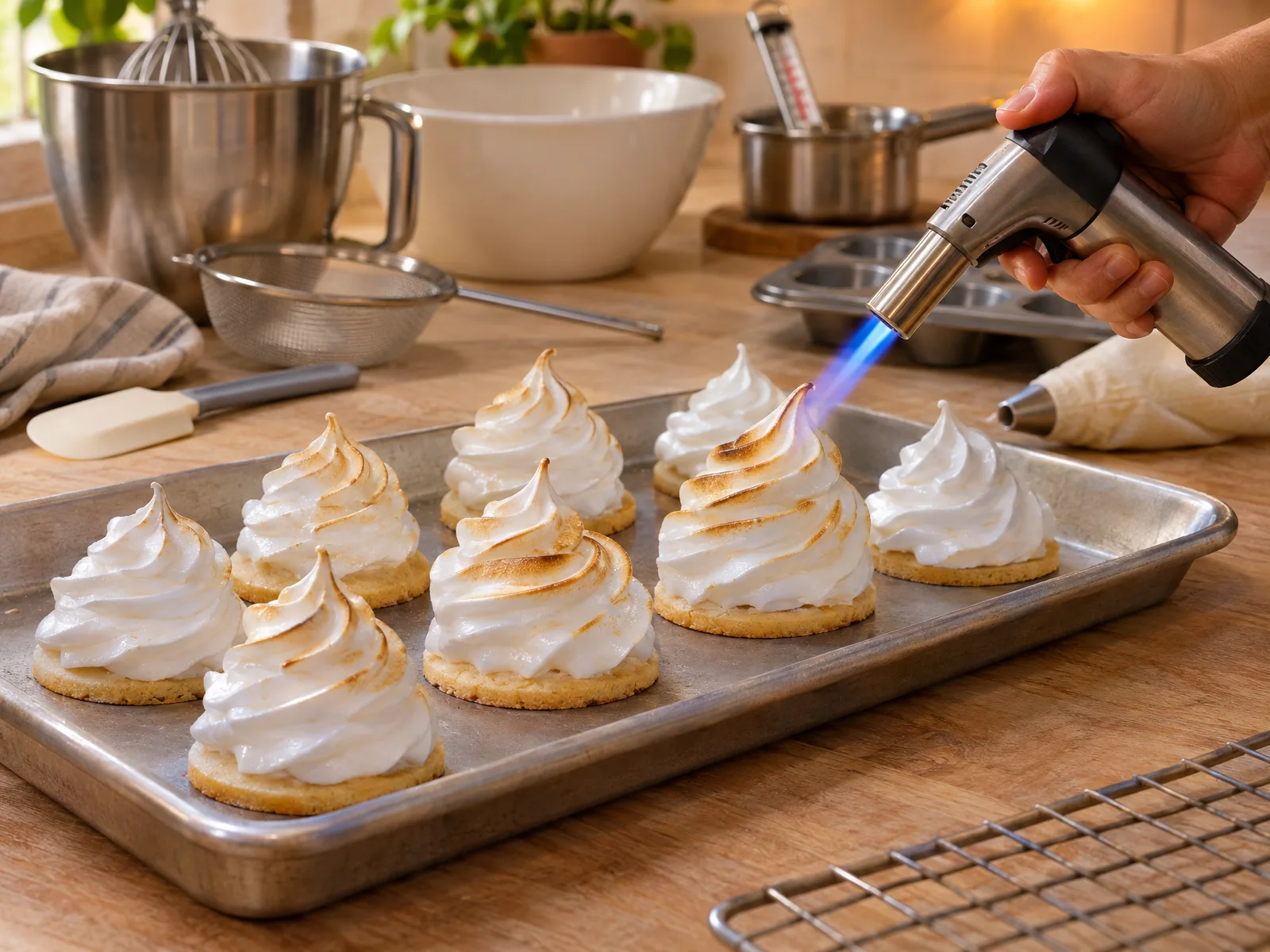
- With a culinary torch: start about 15 cm from the meringue, respecting the device's instructions. Move the flame continuously with brief passes, covering the swirls and the tip. Stop when lightly golden areas appear and keep white parts; the inside must remain soft. Avoid concentrating the flame on one point.
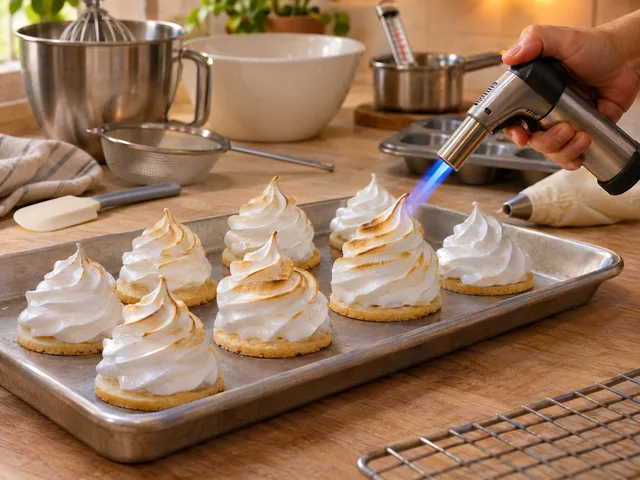
Image generated with AI.CiberCuba - With the oven broiler: preheat it to high power and position the tray so that the meringue tips are at least about 20–25 cm from the heating element. Watch from the first moment and remove the pieces as soon as they start to brown. As a guide, check the color at 20–30 seconds; some ovens will take around 1–2 minutes. Color rules over the clock: look for light browning, without burning the tips or drying the meringue.
- Let the pieces lose surface heat for a few minutes and serve, or refrigerate them again. The desired finish is a white dome with golden reliefs and a soft center.