Cuban recipe
Cold Grouper Loaf with Mayonnaise: A Cuban Recipe from 1925
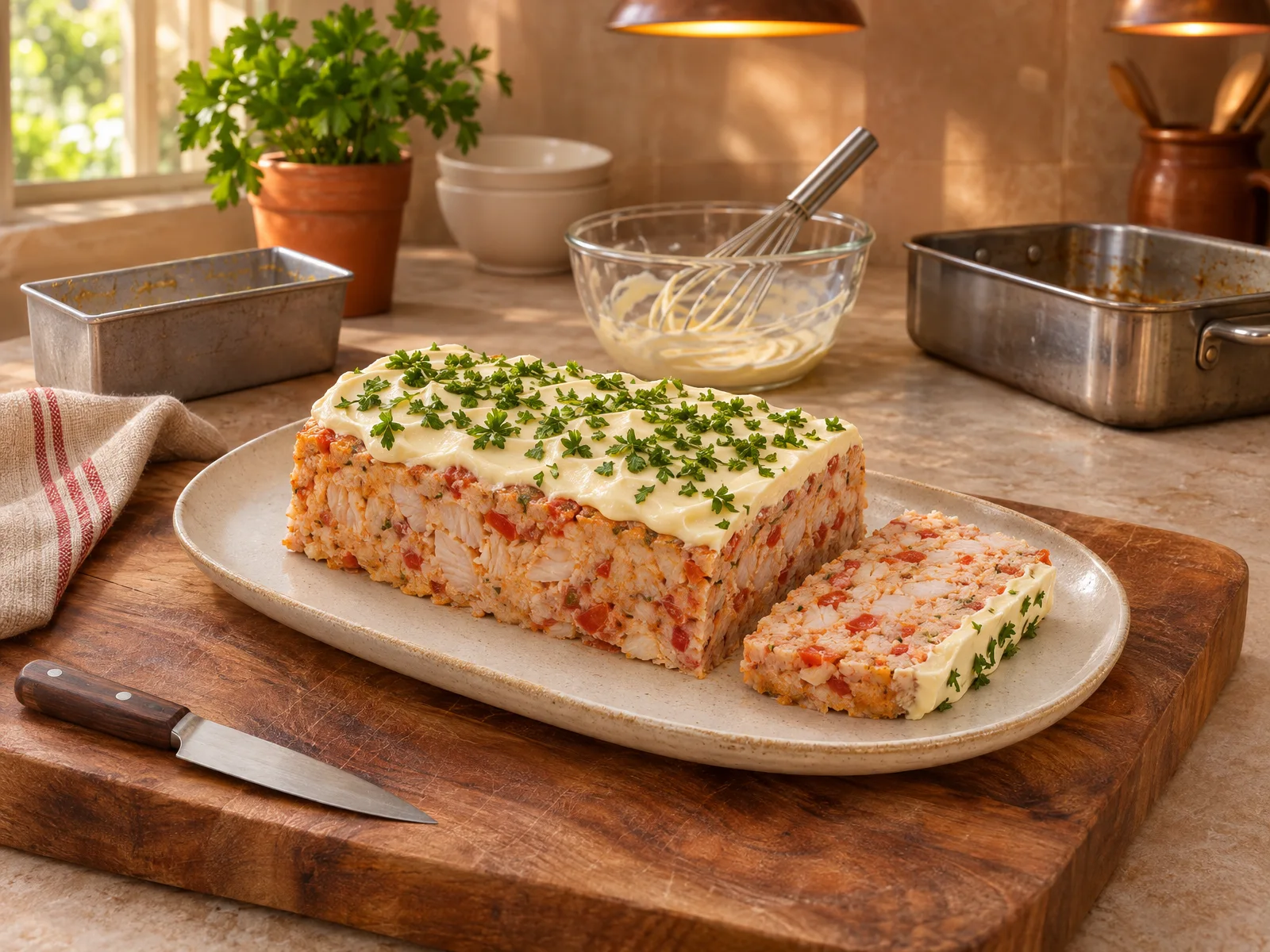
A savory grouper, tomato and egg loaf, set in a water bath and served cold with mayonnaise. An adaptation of a 1925 recipe, made the day before.
- Preparation25 min
- Cooking1 h 10 min
- Total time9 h 55 min
- Servings1 loaf, about 8 starter servings
- DifficultyMedium
Some old dishes are especially convenient when the table fills up with guests. This cold grouper loaf appears in Delicias de la Mesa, the cookbook by María Antonieta Reyes Gavilán y Moenck published in Havana in 1925. The recipe itself recommends making it the day before and covering it with mayonnaise when serving.
We revisit its combination of fish, tomato and eggs in a home-cooking adaptation with specific quantities and temperatures. It sets in a mold in a water bath and is sliced cold: it is a savory loaf without a pastry crust. We suggest it as a Christmas starter in our series devoted to Cuban recipes of the past.
Ingredients
Check off the ingredients you have.
For the loaf
For finishing and the water bath
Method
Prepare the fish and mixture
- Heat the oven to 175 °C/350 °F. Grease the metal mold with the oil and place a strip of parchment paper in the bottom. Have a deep baking pan ready that will hold the mold.
- Bring the liter of water and 3 g of salt to a gentle simmer. Add the grouper and cook gently for about 6–10 minutes, depending on thickness, until the center reaches 63 °C/145 °F. Drain well; discard the cooking water.
- Let the fish cool for about 5–10 minutes, until it stops steaming heavily. Check again for any remaining bones and flake it very finely, or give it a few short pulses in a food processor.
- Beat the eggs in a bowl. Add the tomato sauce, pepper and up to the remaining 3 g of salt, adjusting according to how salty the sauce is. Add the grouper and mix until evenly combined. Do not taste the mixture after adding the raw eggs.
Set in a water bath
- Pour the mixture into the mold, keeping it no more than 4.5 cm deep, and smooth the surface. Cover loosely with aluminum foil. Place it in the baking pan and pour hot water around it until the water reaches halfway up the sides of the mold; do not let water enter the mixture.
- Bake for 45–60 minutes. Check the center with a thermometer: it should reach 74 °C/165 °F and look set, though it may retain a slight springiness. If it needs more time, continue baking in 5-minute increments. Do not rely solely on the color or a toothpick.
Cool and serve the following day
- Remove the mold from the hot water bath. Place it on a rack for 5 minutes, then put it in a container of cold water and ice, taking care that no water can enter. Cool it this way for about 15 minutes, replenishing the ice if it melts. This step is only for the specified metal mold.
- Transfer the mold to the refrigerator immediately, loosely covered and with space around it. Do not wait for it to cool completely on the counter. Once cold, cover it well and refrigerate for at least 8 hours, preferably until the following day, at 4 °C/40 °F or below.
- To serve, run a thin knife around the edges, unmold onto a platter and remove the paper from the base. Spread the cold mayonnaise over the top and finish with the parsley. Cut into 8 portions with a clean knife and keep refrigerated until ready to bring to the table.