Recipe
Brazilian Feijoada Cuban Style with Ribs, Tasajo and Chorizo
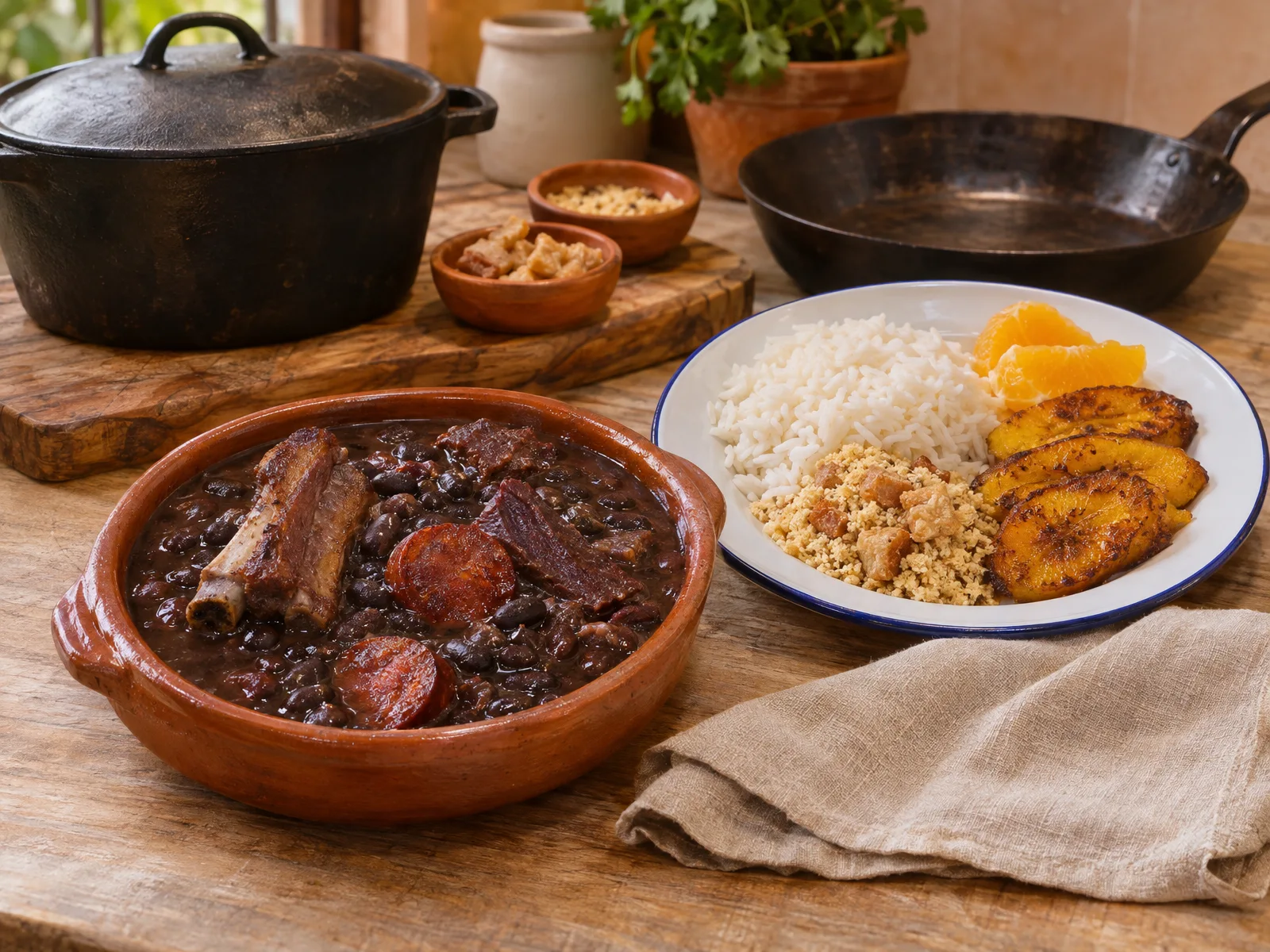
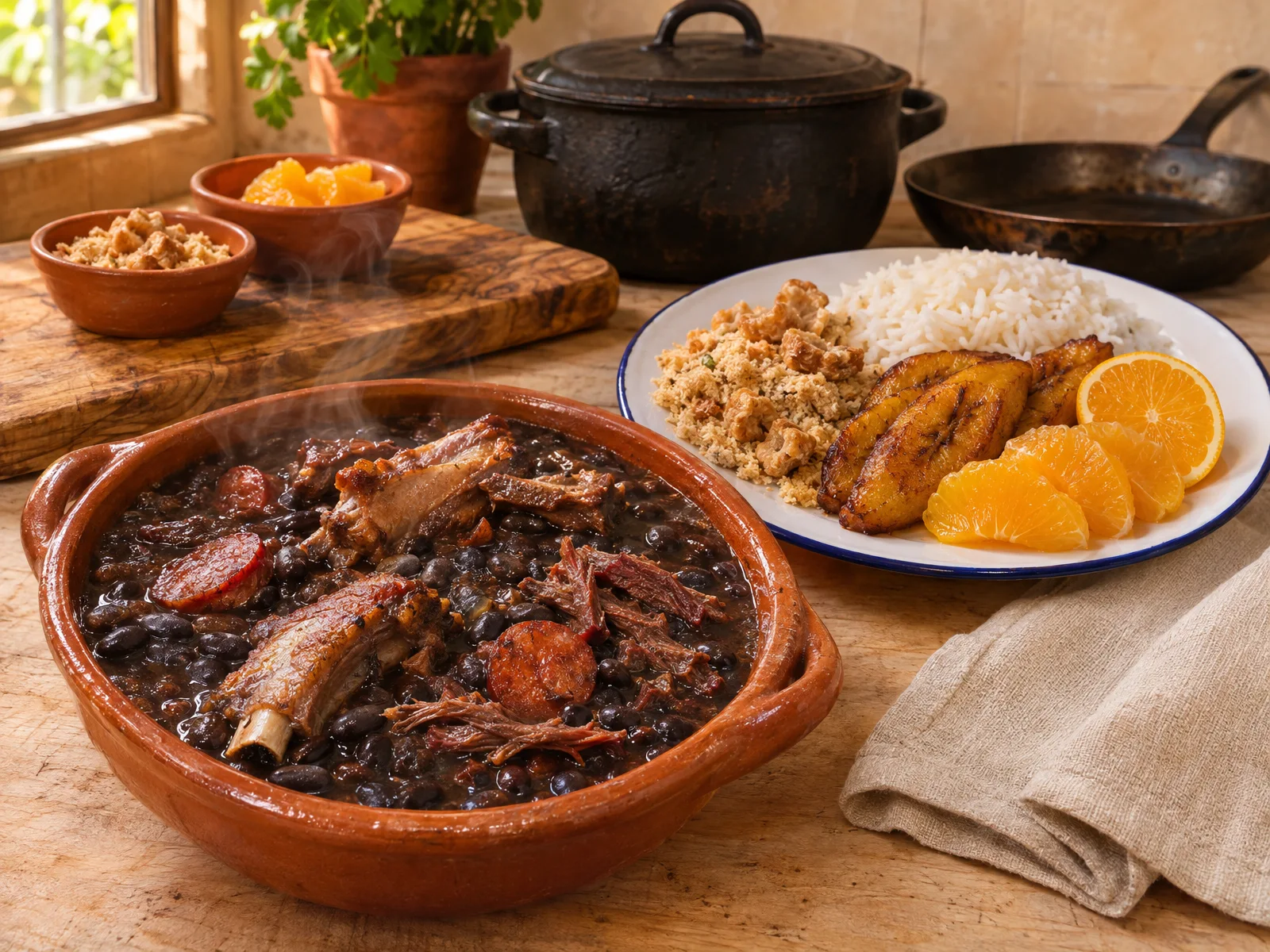
Fusion feijoada: black beans with pork ribs, tasajo and chorizo, served with white rice, cassava farofa with chicharrón, fried ripe plantains and orange.
- Preparation45 min
- Cooking3 h
- Total time3 h 45 min
- Servings6 to 8 servings
- DifficultyMedium
Feijoada is one of Brazil's great dishes: a hearty stew of black beans with various cuts of pork and sausages. Its name comes from feijão, which means bean in Portuguese. It is a hearty stew, with dark, thick broth, whole beans and very tender meats.
This version is not the traditional feijoada nor a classic Cuban dish: it is a deliberate fusion. It takes the Brazilian base and brings it closer to the Creole taste with tasajo, ribs, chorizo and a Cuban sofrito of onion, ají, garlic, cumin and dry wine.
It is served as in Brazil, with white rice, toasted cassava farofa (here with chicharrón), fried ripe plantains and fresh orange to refresh. It is a dish for a large gathering, perfect for a family Sunday.
Ingredients
Check off the ingredients you have.
Feijoada
White rice
Cassava farofa with chicharrón
Fried ripe plantains
To serve
Method
The day before
- Wash the beans, cover them with plenty of cold water and let them soak for 8 to 12 hours. If it is very hot, keep them in the refrigerator.
- Desalt the tasajo in another container, with cold water and in the refrigerator, for 12 to 24 hours depending on thickness, changing the water several times. If it still tastes very salty when tested, give it a boil and discard that water.
- Pre-cook the tasajo in fresh water over low heat until tender enough to chew (depending on its hardness, between 45 minutes and an hour and a half). Drain, cut into pieces or shred and keep in the refrigerator.
Feijoada
- Drain the beans and discard the soaking water. Put them in a large pot with 2 to 2.5 liters of fresh water and the bay leaf. Boil vigorously for about 10 minutes and reduce to low heat. Never let them run out of liquid and do not add salt yet.
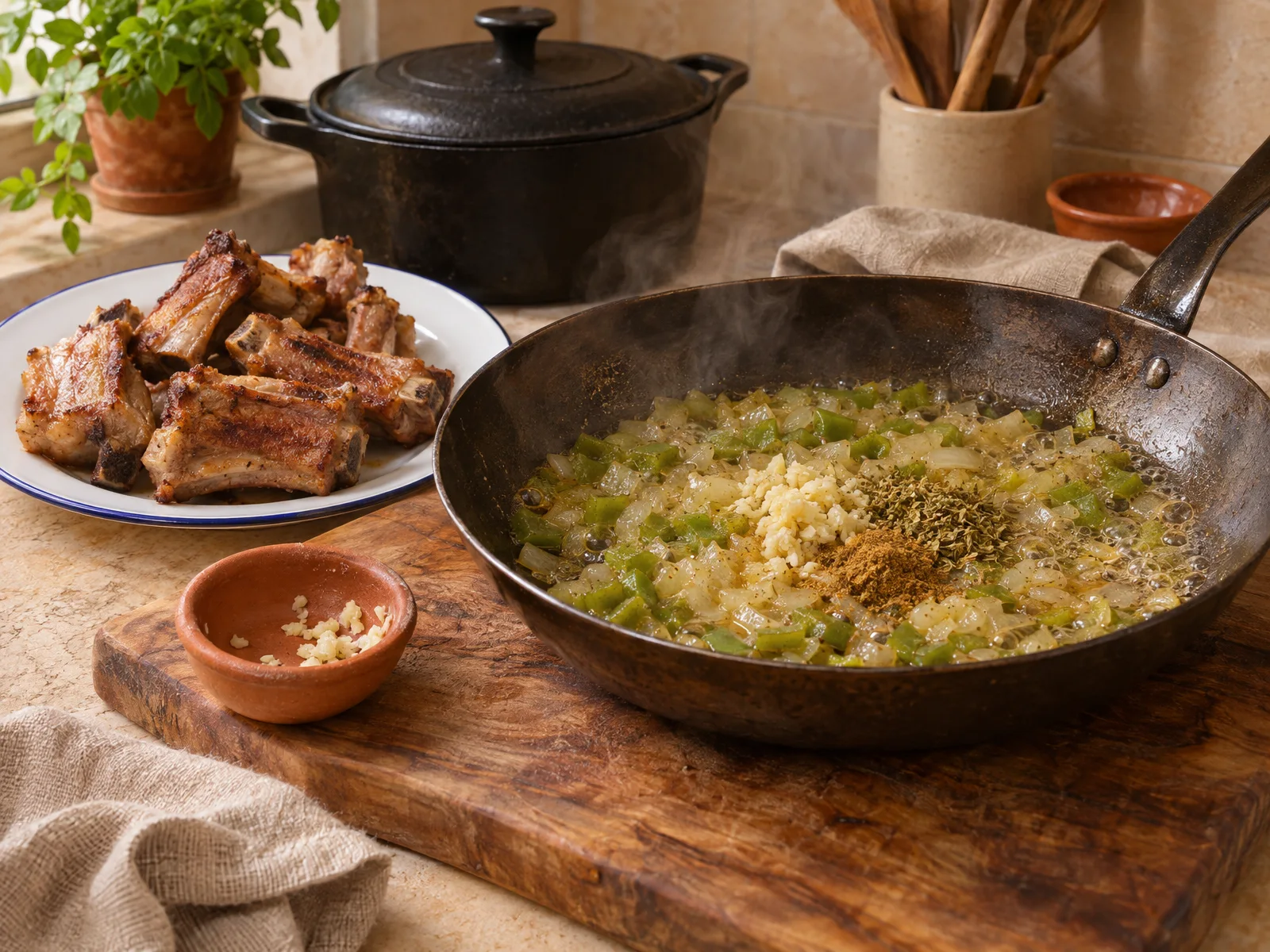
- Meanwhile, dry the ribs well with paper. Heat the oil in a large skillet and brown them in batches, without burning; remove them. If using pork fatback, brown it too and discard some of the excess fat.
- In that flavorful fat, sauté the onion and ají for 5 to 7 minutes, until soft. Add the garlic, cumin and oregano and stir for 30 to 60 seconds. Pour in the dry wine and let the alcohol evaporate for a moment.
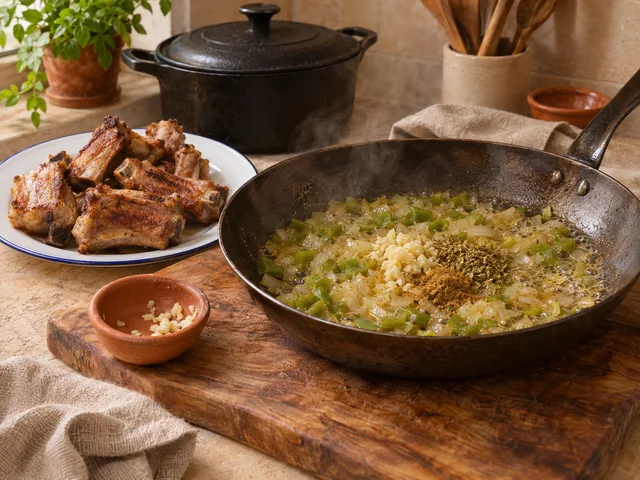
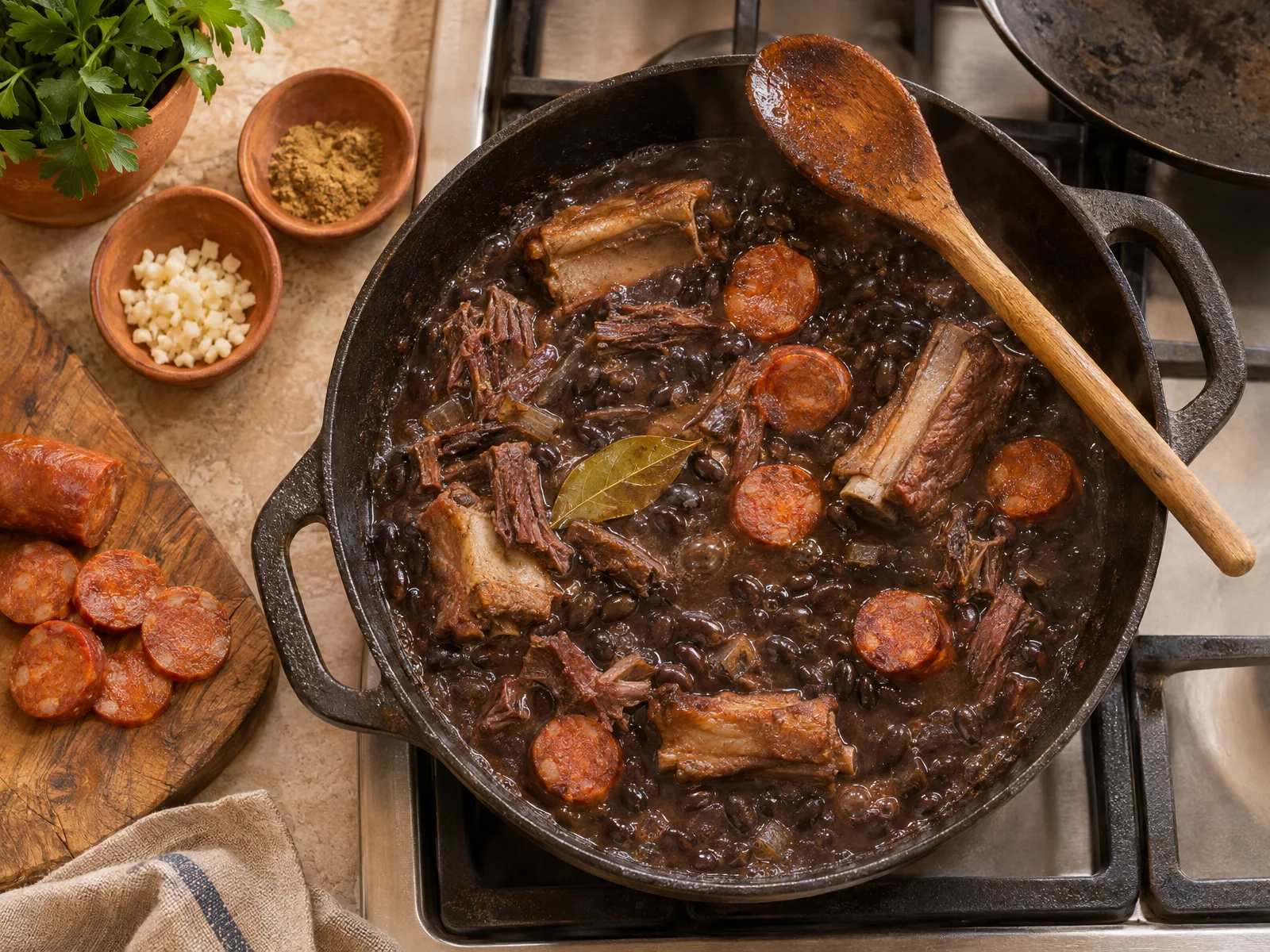
Image generated with AI.CiberCuba - Transfer the browned ribs, pork fatback and all the sofrito to the bean pot, scraping the bottom of the skillet with a little broth. Cook over low heat, with the lid slightly ajar, until the ribs are tender and the beans soft (in total, 90 to 150 minutes or more, depending on the bean). Watch the liquid and add only hot water if needed.
- In the last 30 to 45 minutes add the pre-cooked tasajo and chorizo slices (add the tasajo first if it is still hard). If using dry ready-to-eat chorizo, add it at the end just to warm it. If you see a lot of fat on the surface, remove some carefully. The pork must be completely cooked.
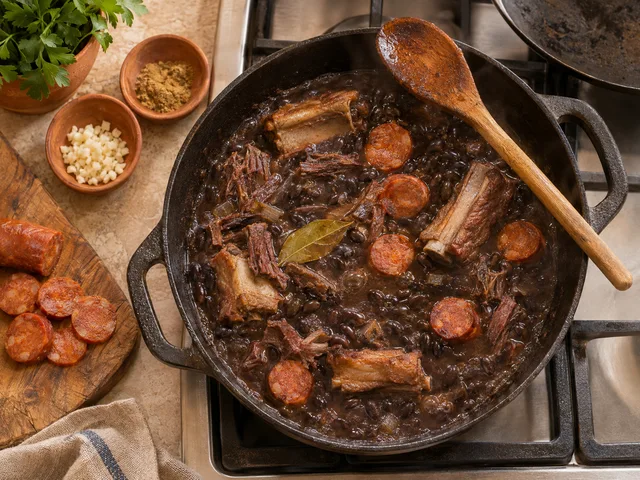
Image generated with AI.CiberCuba - To thicken, mash 2 or 3 tablespoons of beans against the side of the pot and let reduce without lid for 10 to 20 minutes, stirring so it does not stick. It must result in a creamy stew, with a thickened broth, neither dry nor watery. Taste, season with salt and pepper only now and remove the bay leaf.
White rice
- Put the rice on the heat with the water, oil and salt. When it boils, cover and cook over low heat for 15 to 18 minutes (or whatever your variety requires). Turn off and let rest covered for 5 minutes; it must be loose.
Farofa
- In a skillet over low-medium heat, melt the butter (or heat the oil) and lightly sauté the garlic, without burning it.
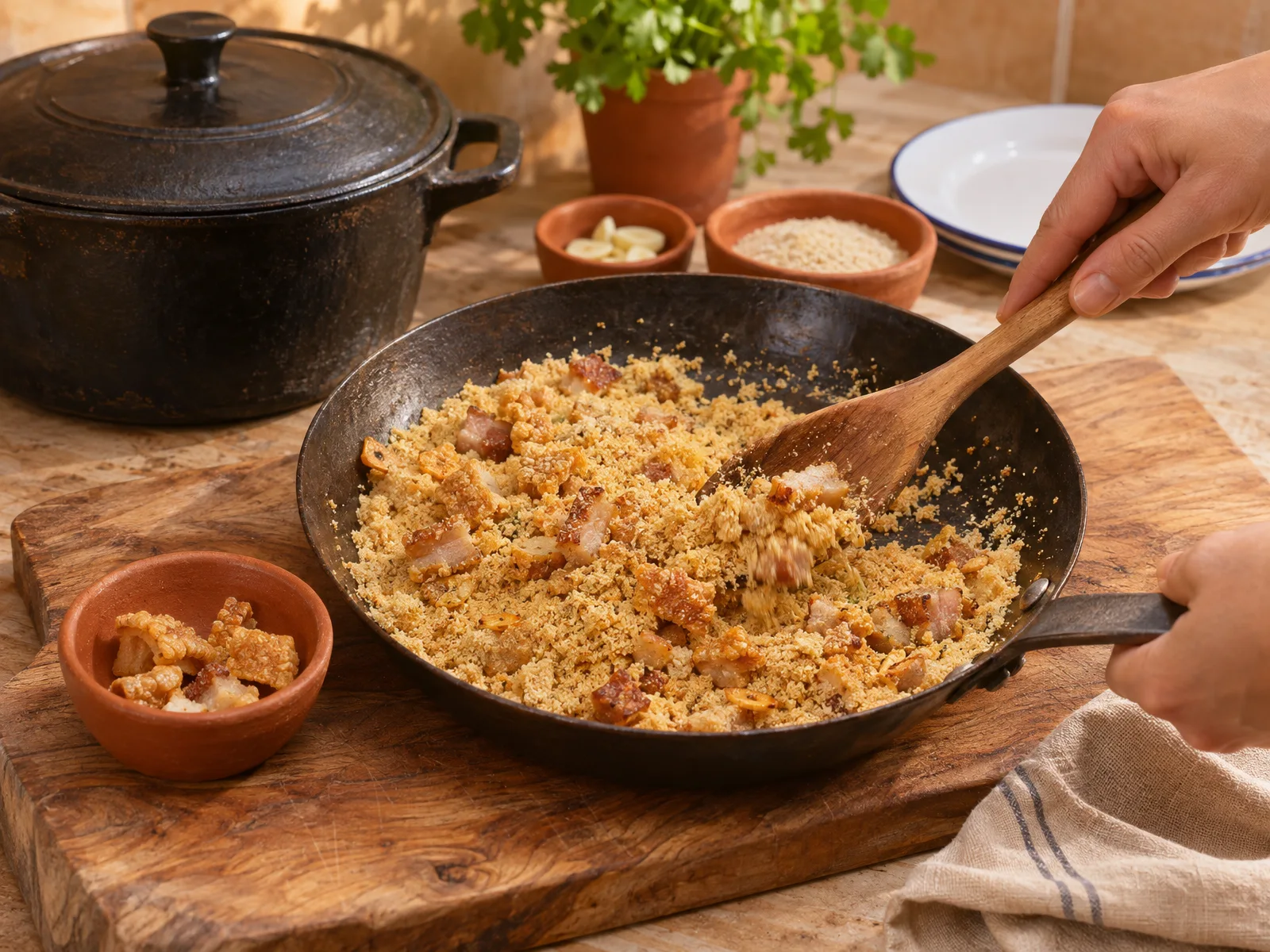
- Add the farinha de mandioca little by little and stir for 4 to 8 minutes, until it takes on a light golden color and becomes loose, toasted crumbs. If the flour was already toasted, 2 or 3 minutes are enough.
- Remove from heat and incorporate the chopped chicharrón so it stays crunchy. Adjust the salt carefully. The farofa is dry and granular, never a porridge or cassava puree.
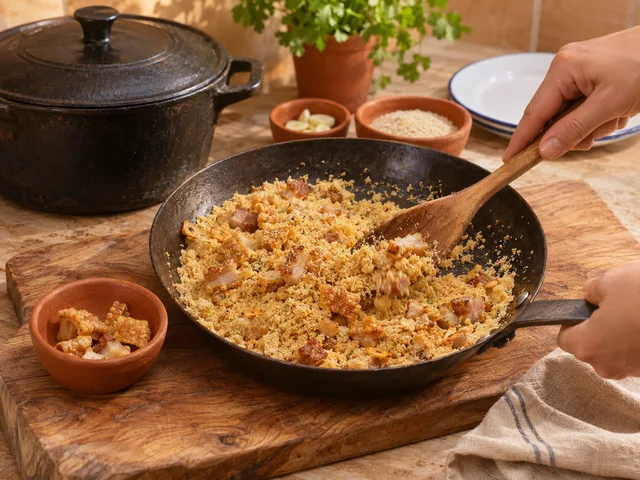
Image generated with AI.CiberCuba
Fried ripe plantains
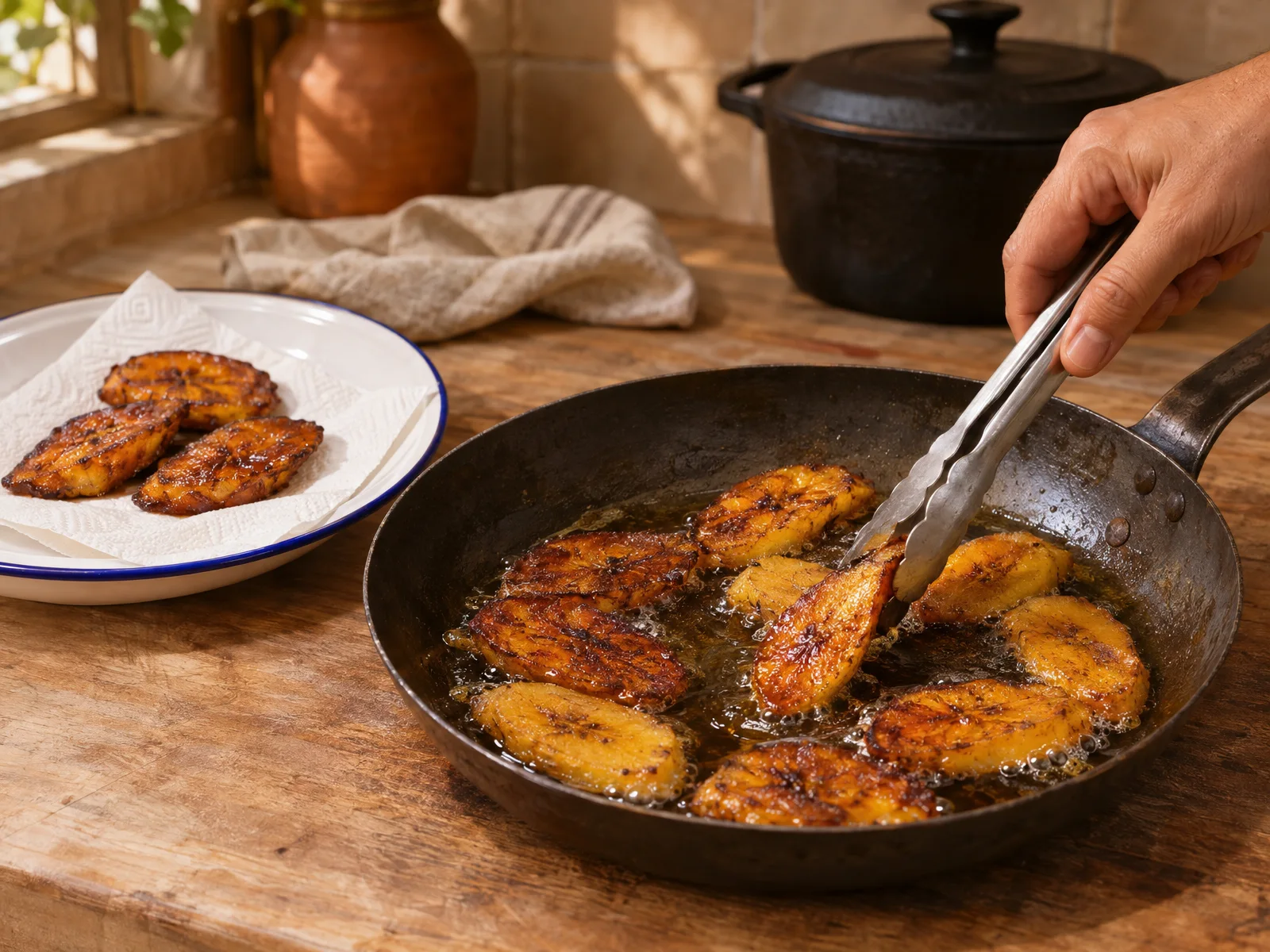
- Peel the plantains and cut them into diagonal slices 1 to 1.5 cm thick. Fry in batches in moderately hot oil until golden and caramelized on both sides. Drain on paper and serve hot.
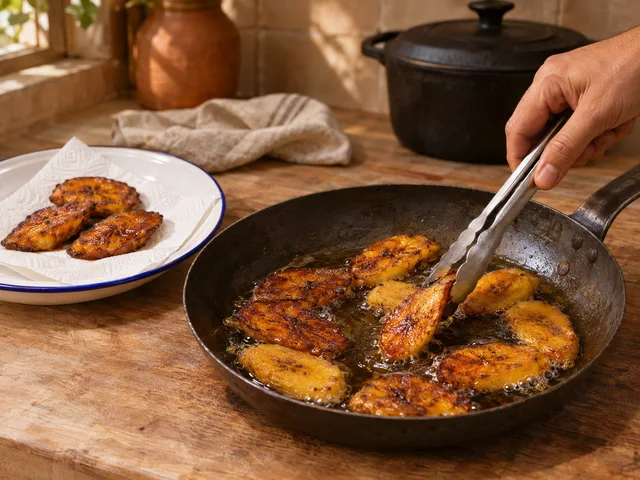
Image generated with AI.CiberCuba
To serve
- Peel the oranges and cut them into slices or segments without seeds. Do not cook them: they go fresh, to provide contrast and refresh the palate.
- If the feijoada is boiling, let it rest for 5 to 10 minutes. Serve in a casserole or deep dish, with the beans, ribs, tasajo and chorizo well visible. On the side put the white rice, a mound of farofa, some slices of maduro and 2 or 3 orange segments. It is abundant food, for sharing.
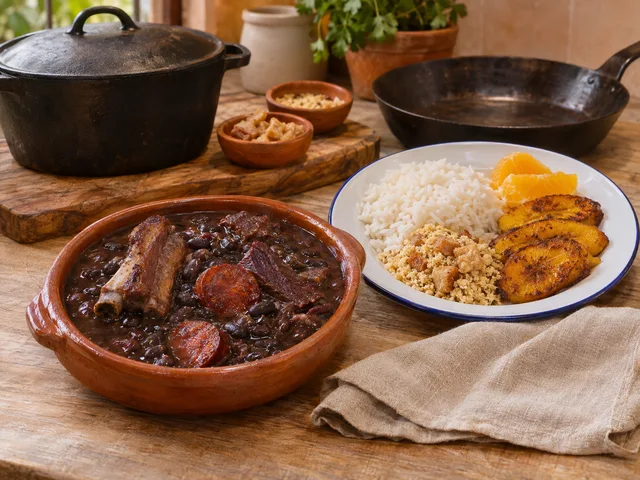
Image generated with AI.CiberCuba