Recipe
Cuban guava and cream cheese stuffed torrejas
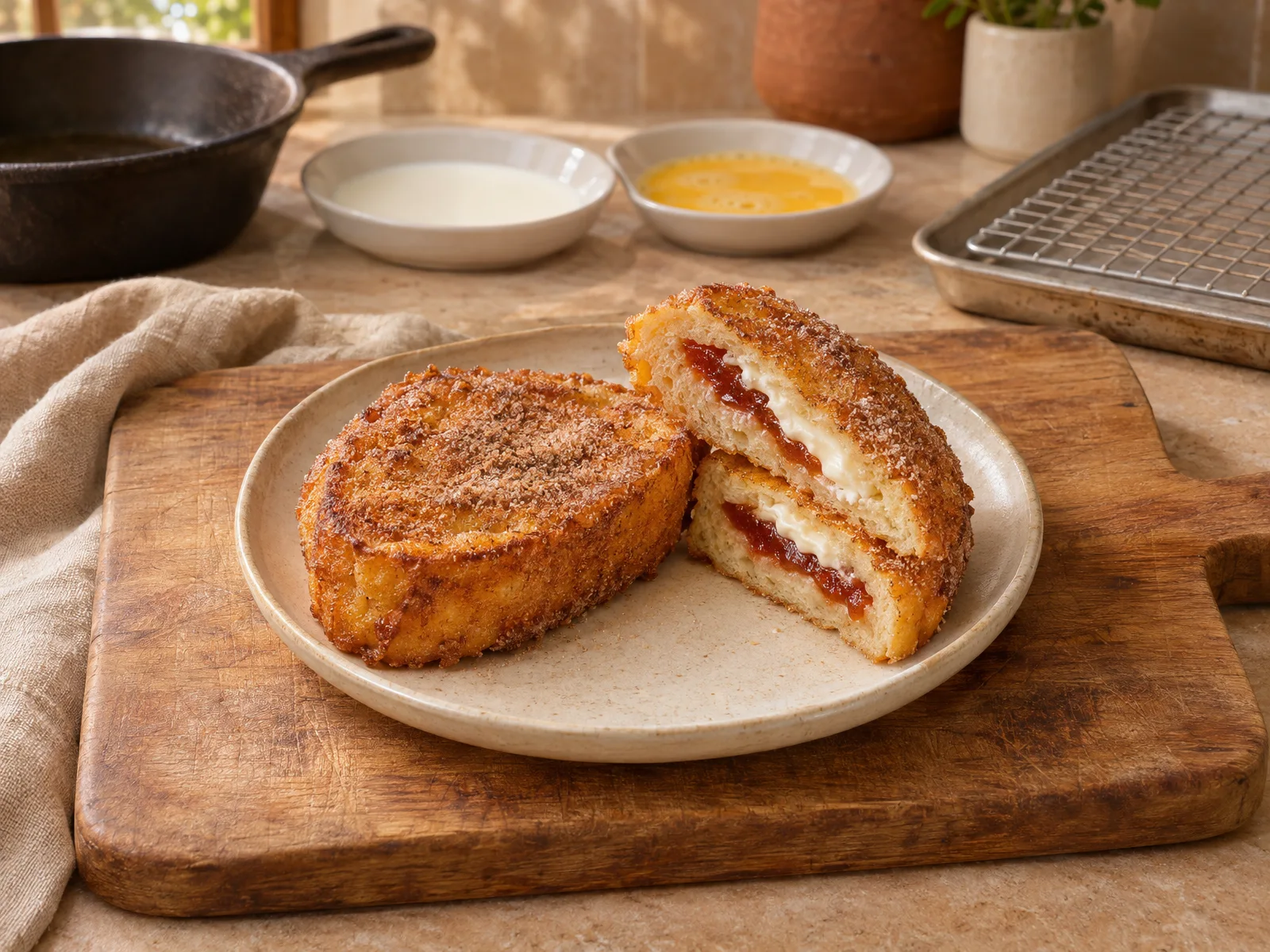
Cuban bread torrejas with a pocket filled with guava paste and cream cheese, golden on the outside and creamy on the inside.
- Preparation25 min
- Cooking25 min
- Total time1 h 10 min
- Servings4 stuffed torrejas (4 servings)
- DifficultyMedium
Guava and cream cheese stuffed torrejas combine milk and egg-soaked bread with a sweet and creamy filling. Here, the guava and cheese do not go on top: they stay inside the bread, in a pocket opened in each thick slice.
Unlike Cuban syrup-soaked torrejas or grandma's torrejas, this version has a filling. You must leave the bread edges connected, use the right amount of guava and cheese, soak without overdoing it, and control the cooking of the center. To prepare them in the United States, look for Cuban bread with a firm crumb, guava paste, and block cream cheese.
Yields 4 thick torrejas, one per person, for an afternoon snack or a Sunday breakfast with coffee.
Ingredients
Check off the ingredients you have.
For the bread and filling
For the flavored milk
For the coating and frying
For the finish
Light syrup (optional)
Method
Flavored milk
- In a small saucepan, place the milk with the cinnamon stick, pinch of salt and sugar, if using. Heat over medium-low heat for 4-5 minutes, until it steams and small bubbles appear at the edge. Do not let it boil. Turn off the heat.
- Add the vanilla, cover and let infuse for 10 minutes. Remove the cinnamon and pour the milk into a shallow dish about 20 cm (8 in) wide. Let it cool for about 15 minutes, or until it is no longer hot. Meanwhile, prepare the bread.
Pocket and filling
- With a serrated knife, cut the loaf diagonally into 4 wide slices 4 cm (approximately 1½ in) thick, about 45 g each.
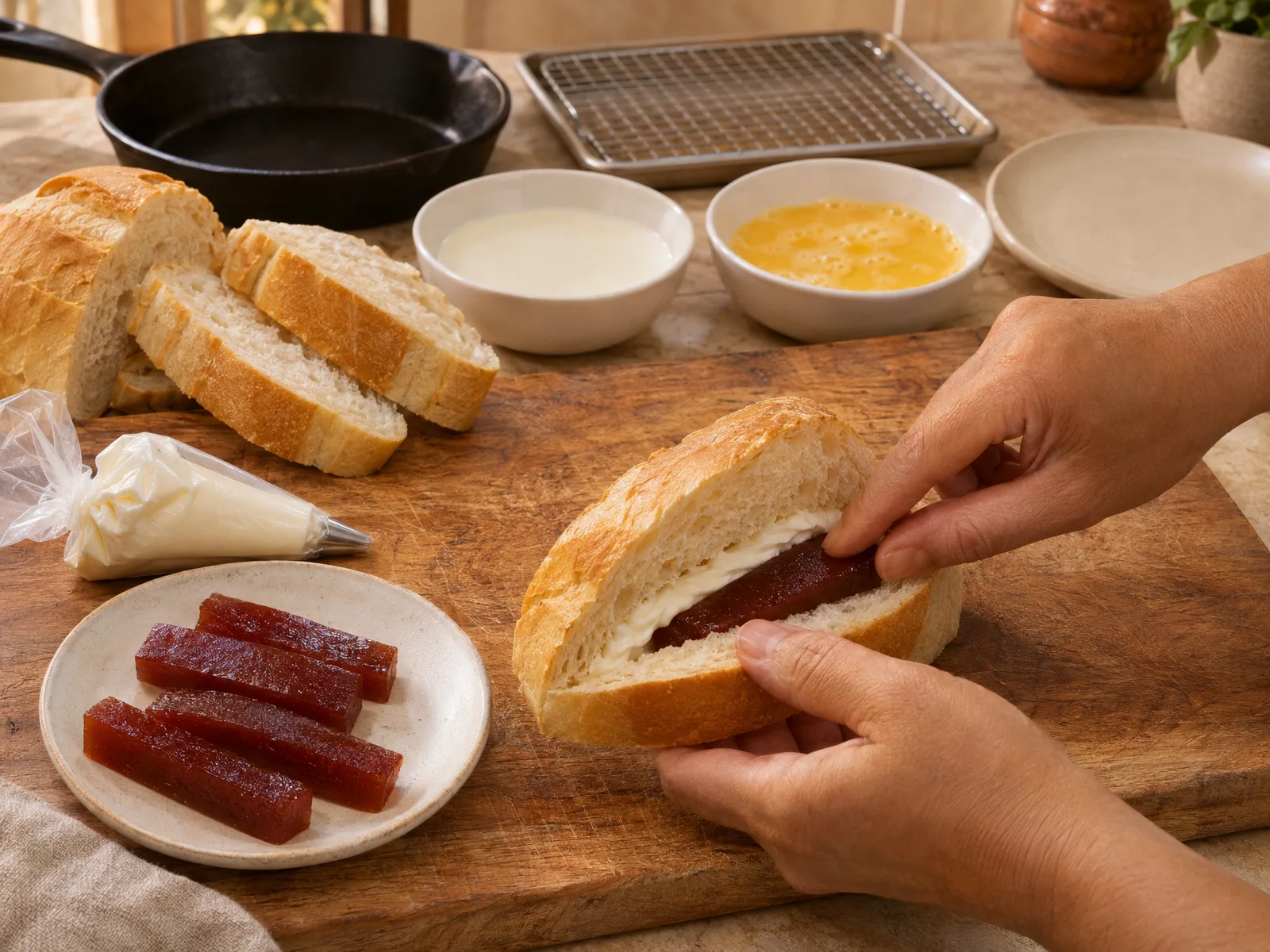
- Place each slice flat on a stable board. Insert a paring knife from one side of the crust, at mid-height and with the blade parallel to the board. Make an opening about 4-5 cm long and widen the cavity inward without piercing the faces. Leave approximately 1 cm of bread uncut at the bottom and other edges. The depth depends on the slice size: it must remain a pocket, not two separate halves. Keep fingers out of the blade's path.
- Divide the guava paste into 4 portions of 25 g and cut each into thin strips that fit in the pocket. Also divide the cream cheese into 4 portions of 20 g.
- Carefully open the pocket and spread a portion of cream cheese on one inner face with a small spoon. Insert the guava strips without forcing or tearing the bread. Leave approximately 1 cm free next to the opening and gently bring the edges together.
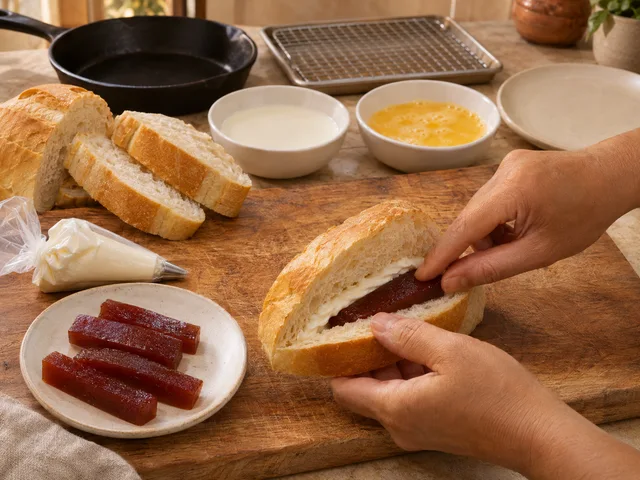
Image generated with AI.CiberCuba - Place the stuffed slices on a plate and refrigerate for 10 minutes so the filling firms up.
Soaking, coating and frying
- Pour oil into a heavy 25-26 cm (10 in) skillet, placed stably on the burner, until forming a layer 1.5 cm (approximately ⅝ in) deep. Heat to about 170 °C (340 °F) and check the temperature with an appropriate frying thermometer. The amount of oil needed varies according to the bottom diameter.
- In another shallow dish, beat the eggs with the pinch of salt until homogeneous, without making foam.
- Soak each slice in the cooled milk for about 5 seconds per side, trying not to flood the opening. Lift it with a wide spatula and let it drain for approximately 1 minute. It should be moist but firm, not falling apart. Adjust soaking according to the bread's absorption and avoid leaving it submerged.
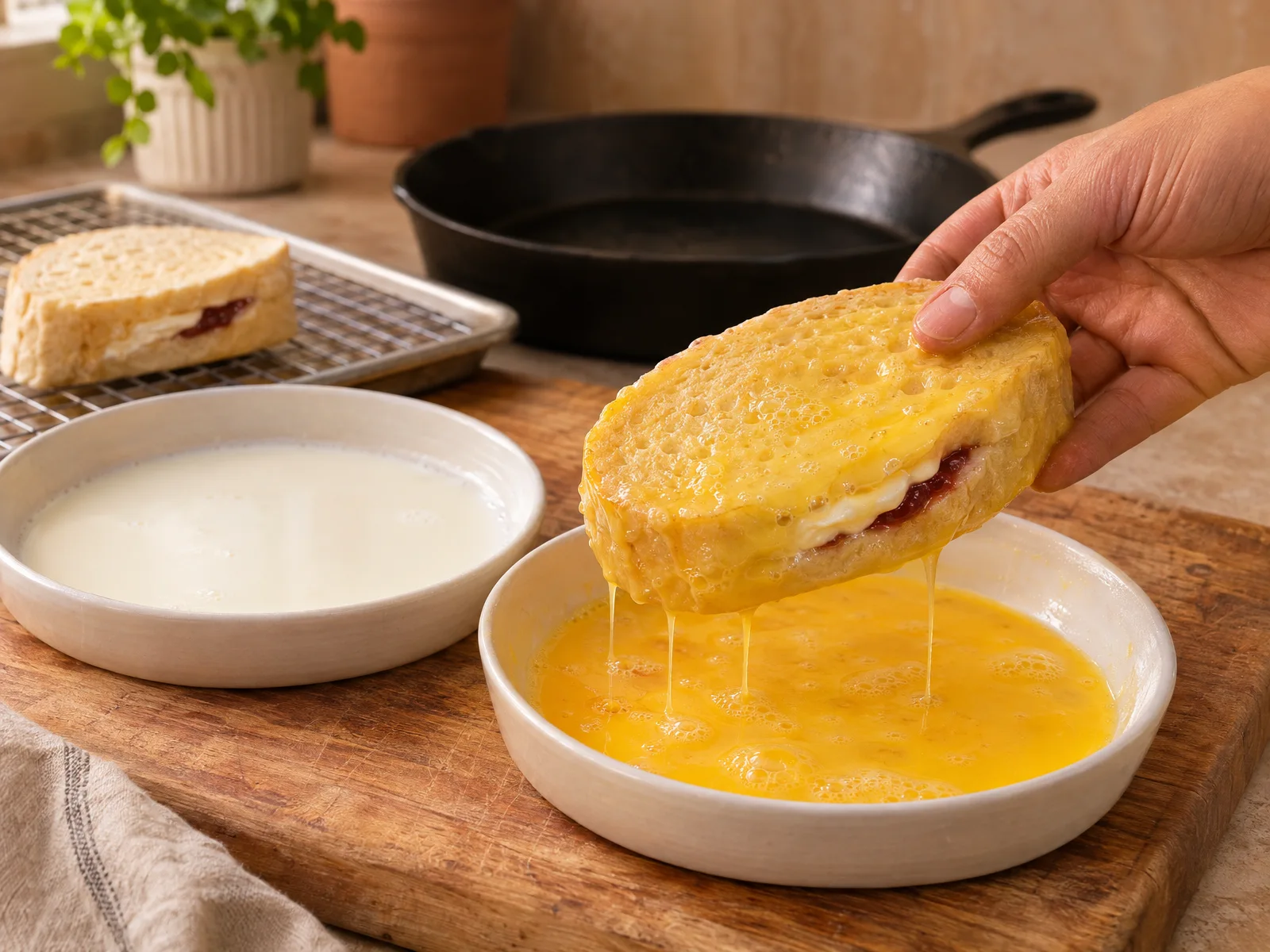
- Pass the slice through the beaten egg and cover both faces and all edges, including the opening. Let excess drip off for a few seconds. Use a rack and separate clean utensils for already cooked torrejas.
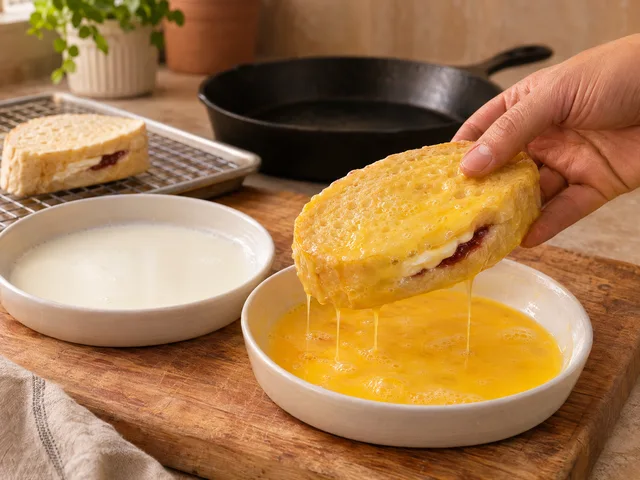
Image generated with AI.CiberCuba - Fry in batches of 2. With the help of a spatula and tongs, first rest the edge of the opening in the oil for about 20-30 seconds, so the egg begins to set. Then lay the torreja flat and fry for about 2½-3 minutes per side, until golden. Briefly brown the other edges if necessary. Keep the oil between 165 and 175 °C (approximately 330-350 °F) and avoid pressing the bread.
- Check that the egg is set and the surface golden. Also verify with a kitchen thermometer that the center reaches 71 °C (160 °F): the exterior color does not guarantee the interior is done. If it is already golden but has not yet reached that temperature, transfer it to a tray with a rack and finish cooking in the oven at 180 °C (approximately 350 °F). Start checking after 5 minutes and continue until the indicated temperature is reached, without relying solely on time.
- Drain the torrejas on a clean rack, over a tray, for 1-2 minutes. Before frying the next batch, let the oil recover its temperature. Discard any egg and milk that have come into contact with the bread during coating.
Finish
- Mix the sugar with the ground cinnamon and sprinkle a light layer on both faces while the torrejas are still hot.
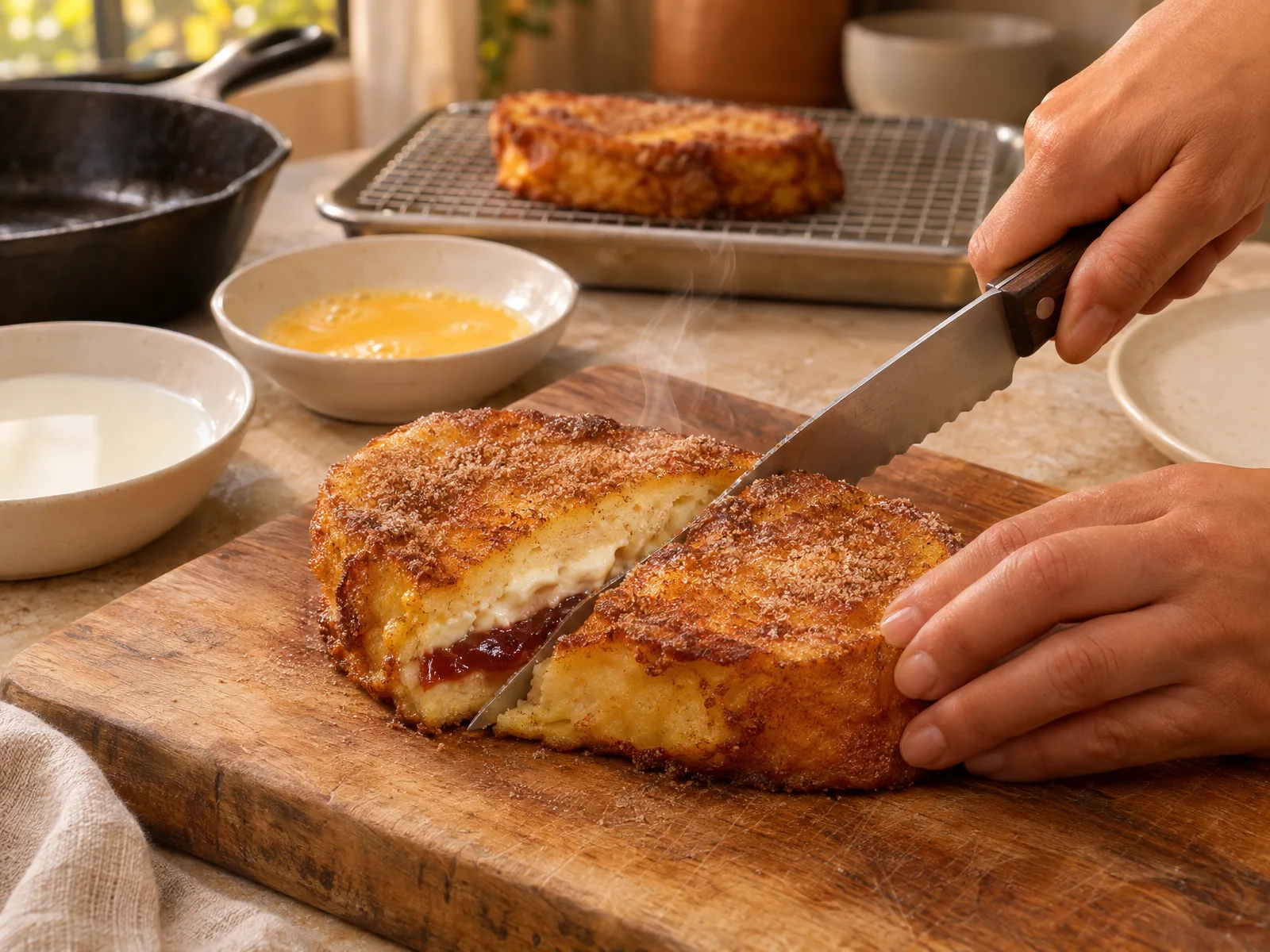
- Let them rest for 3-5 minutes before cutting, because the guava filling retains a lot of heat. Cut diagonally with a serrated knife and serve.
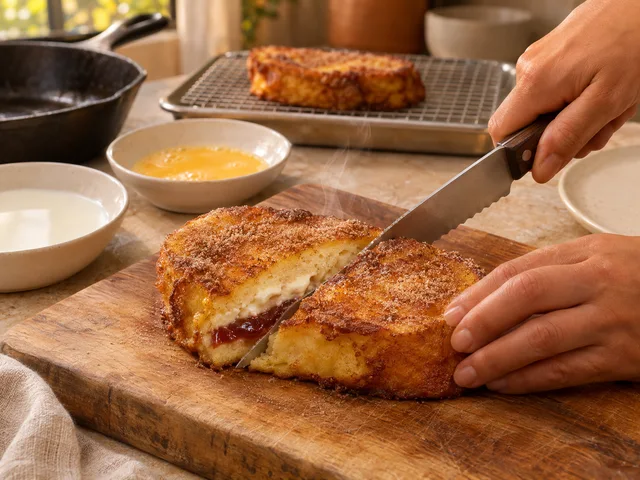
Image generated with AI.CiberCuba
Light syrup (optional)
- For the syrup, boil the sugar with the water and half cinnamon stick for about 4-5 minutes, until dissolved and slightly thickened, without letting it take color. You can do this while the milk cools. Remove the cinnamon and serve up to 1 tablespoon per torreja, preferably separately.