Recipe
Basque cheesecake with guava: Cuban-style toasted cheesecake
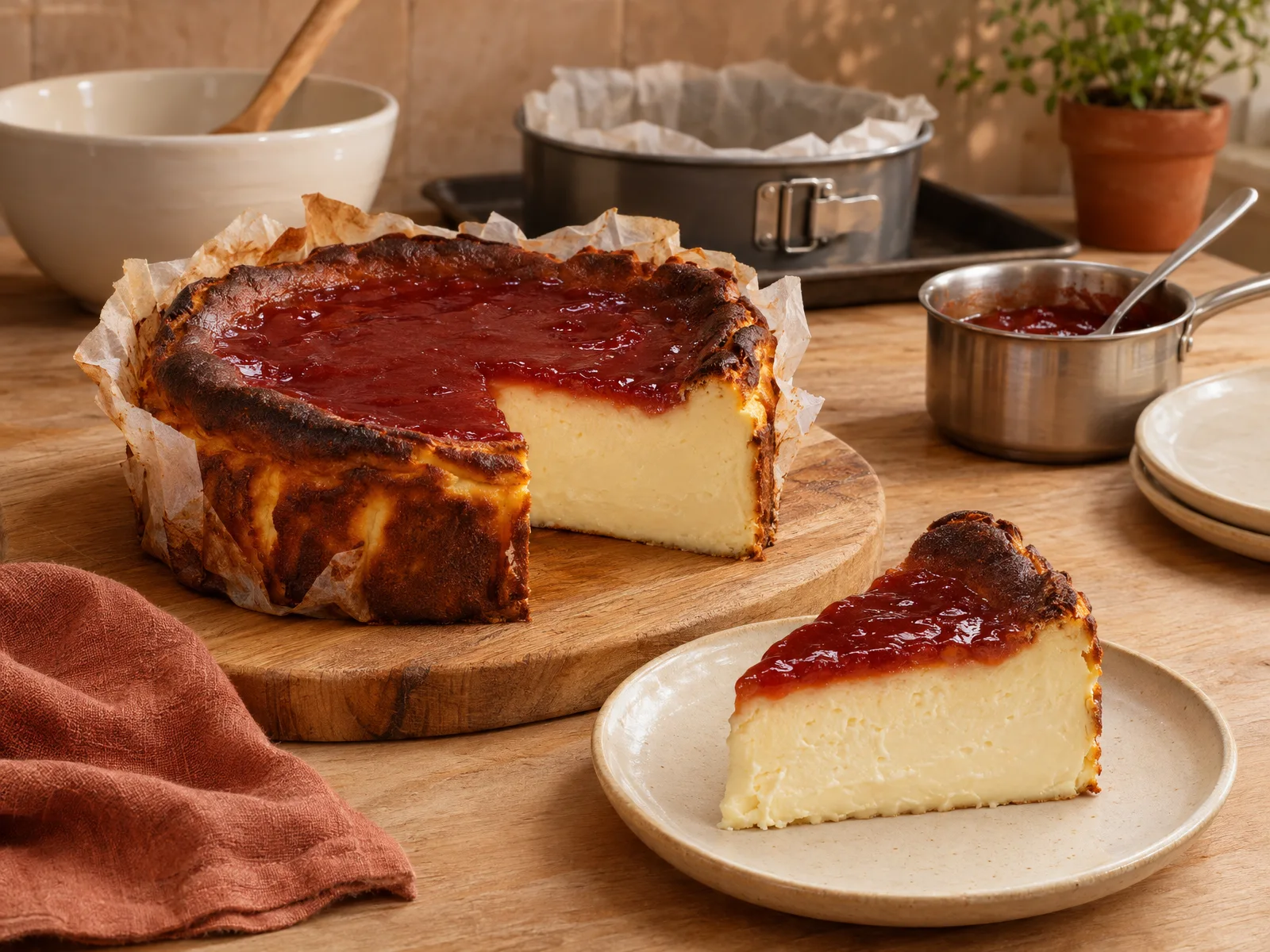
Basque cheesecake without a crust or water bath, with a well-toasted crust, creamy center, and a thin layer of red guava as a Cuban nod.
- Preparation20 min
- Cooking50 min
- Total time6 h 10 min
- Servings8-10 servings
- DifficultyMedium
The Basque cheesecake, also called Basque cheesecake or burnt cheesecake, was born in San Sebastián, in the Basque Country. It has no cookie crust and is not baked in a water bath: it is cooked at very high heat so that the surface toasts until almost black, while the center sets but remains silky.
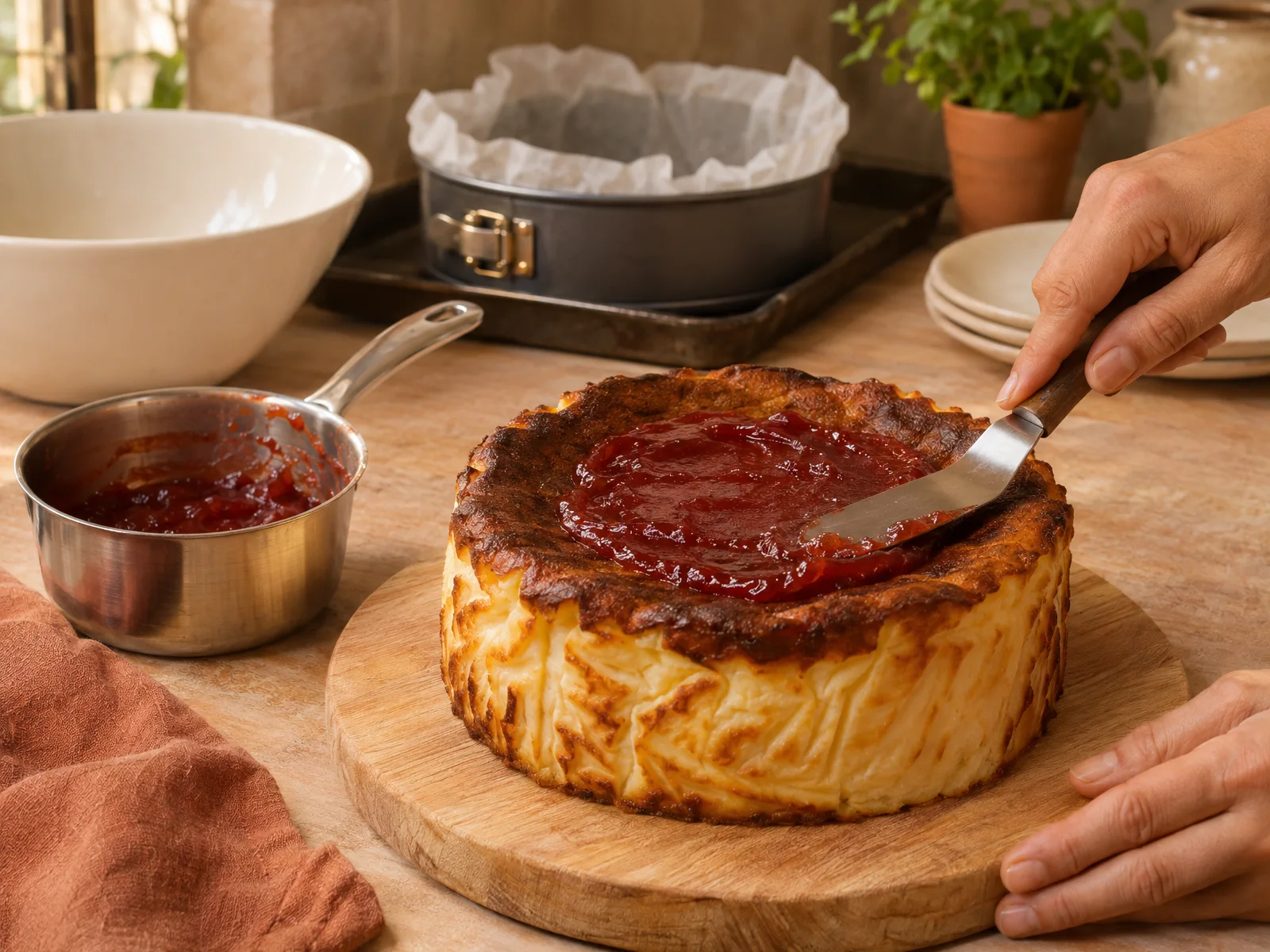
The Cuban touch lies in the guava. In Cuba, cheese with guava sweet is a classic of all time, so a thin layer of red jam on this cake results in a natural pairing. The guava is added at the end, with the cake already cold, and a ring of toasted crust is left visible so it does not lose its Basque identity.
It is a perfect dessert for a family Sunday or a birthday, and it is best made a day in advance.
Ingredients
Check off the ingredients you have.
For the cake
For the guava topping
Method
Cake
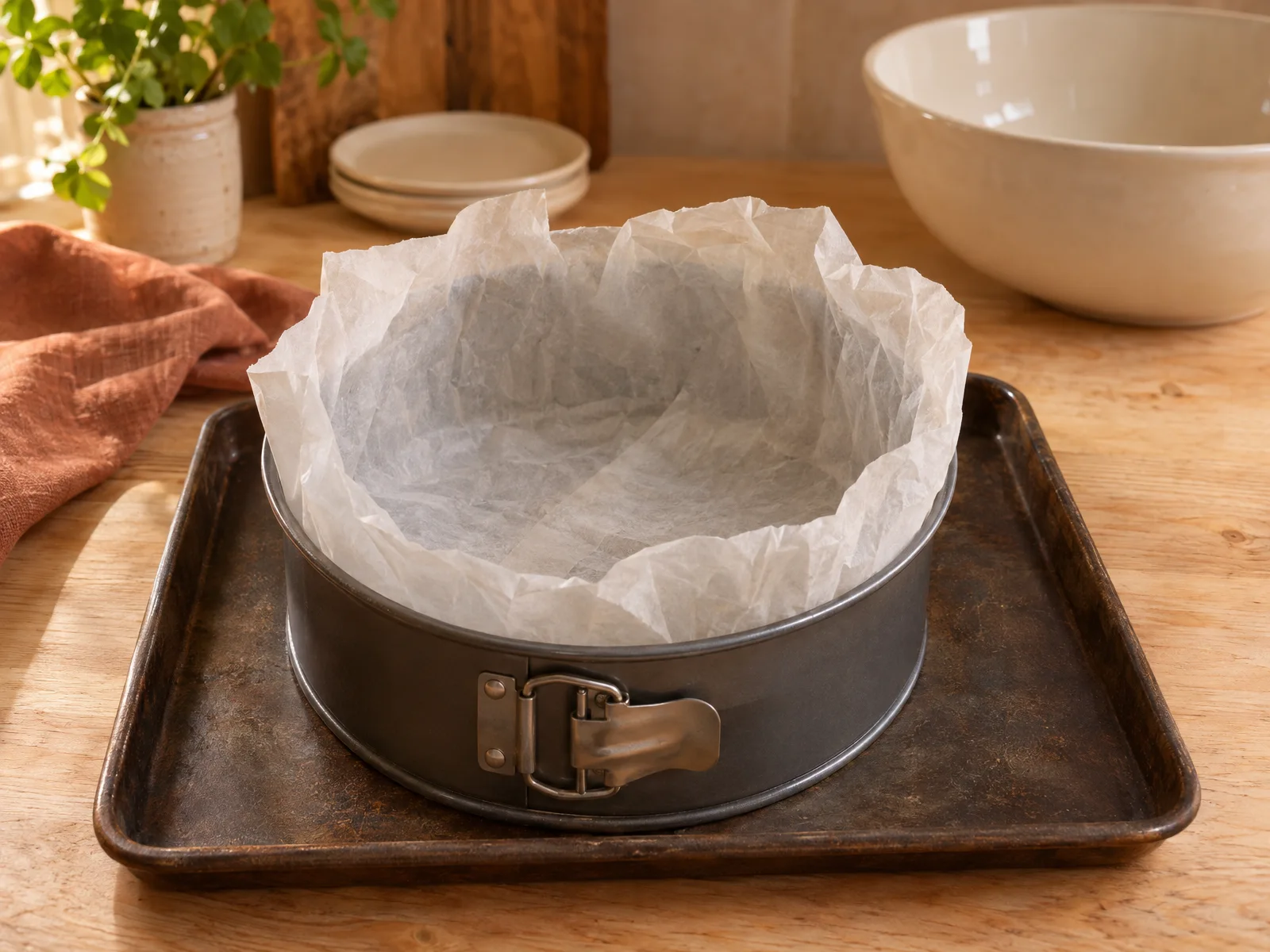
- Take the cream cheese and eggs out of the refrigerator in advance so they lose their chill and the mixture does not form lumps. Preheat the oven to 220 °C, top and bottom heat, without fan. Line a 20 cm springform pan with two large sheets of parchment paper, crumpled and then spread out, placed in a cross; leave at least 5 cm of paper sticking out from the edge, because the cake rises. Place the mold on a baking sheet for safety.
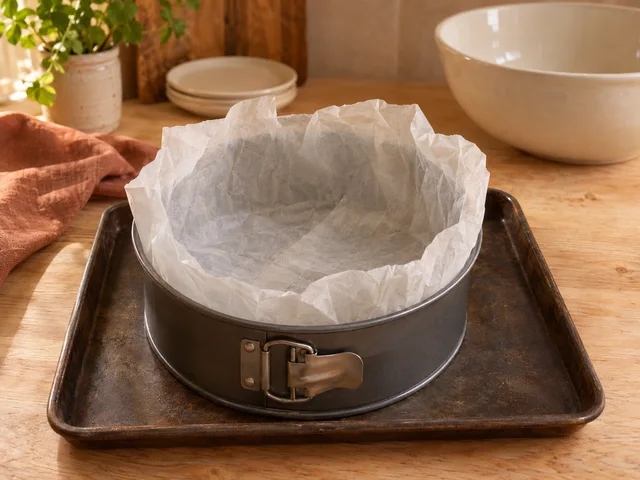
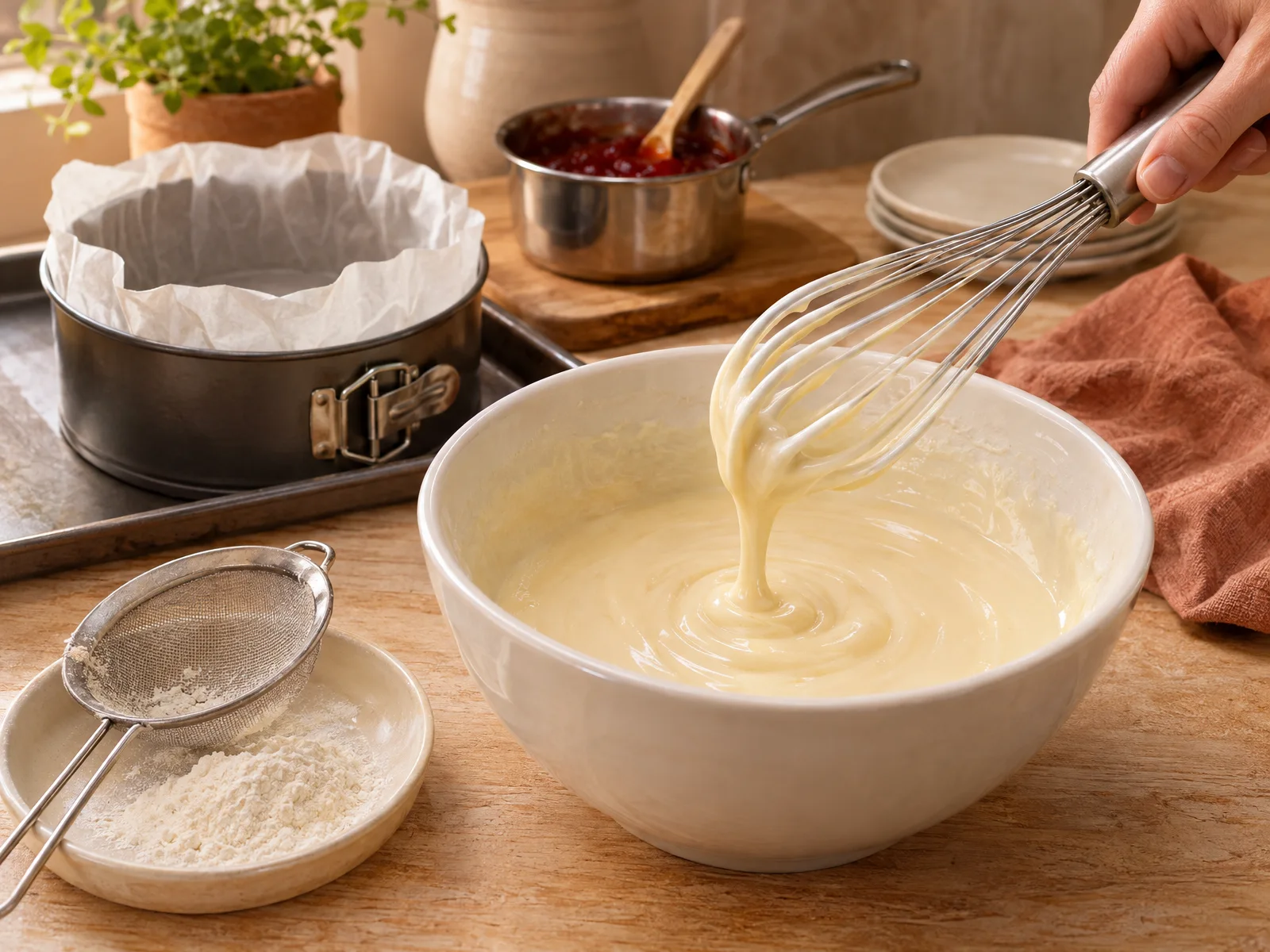
Image generated with AI.CiberCuba - In a large bowl, beat the cream cheese with the sugar at low speed until you have a smooth cream without lumps. There is no need to whip it or incorporate air.
- Add the eggs one by one, mixing gently after each one. Add the whipping cream, vanilla, and salt. Finally, incorporate the sifted flour and mix just enough to integrate it. If you see lumps, pass the mixture through a coarse strainer before pouring it in.
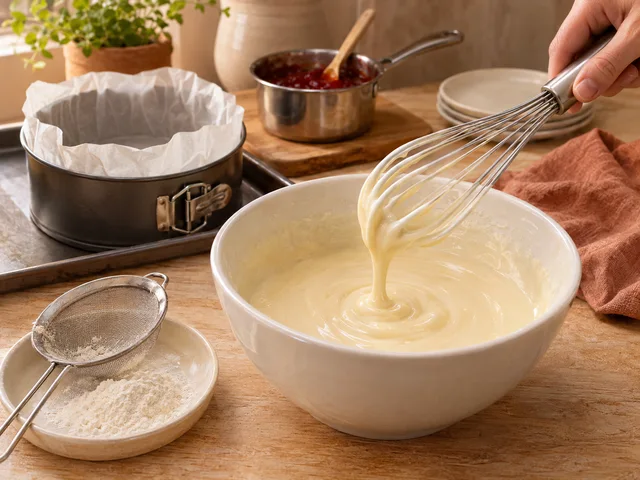
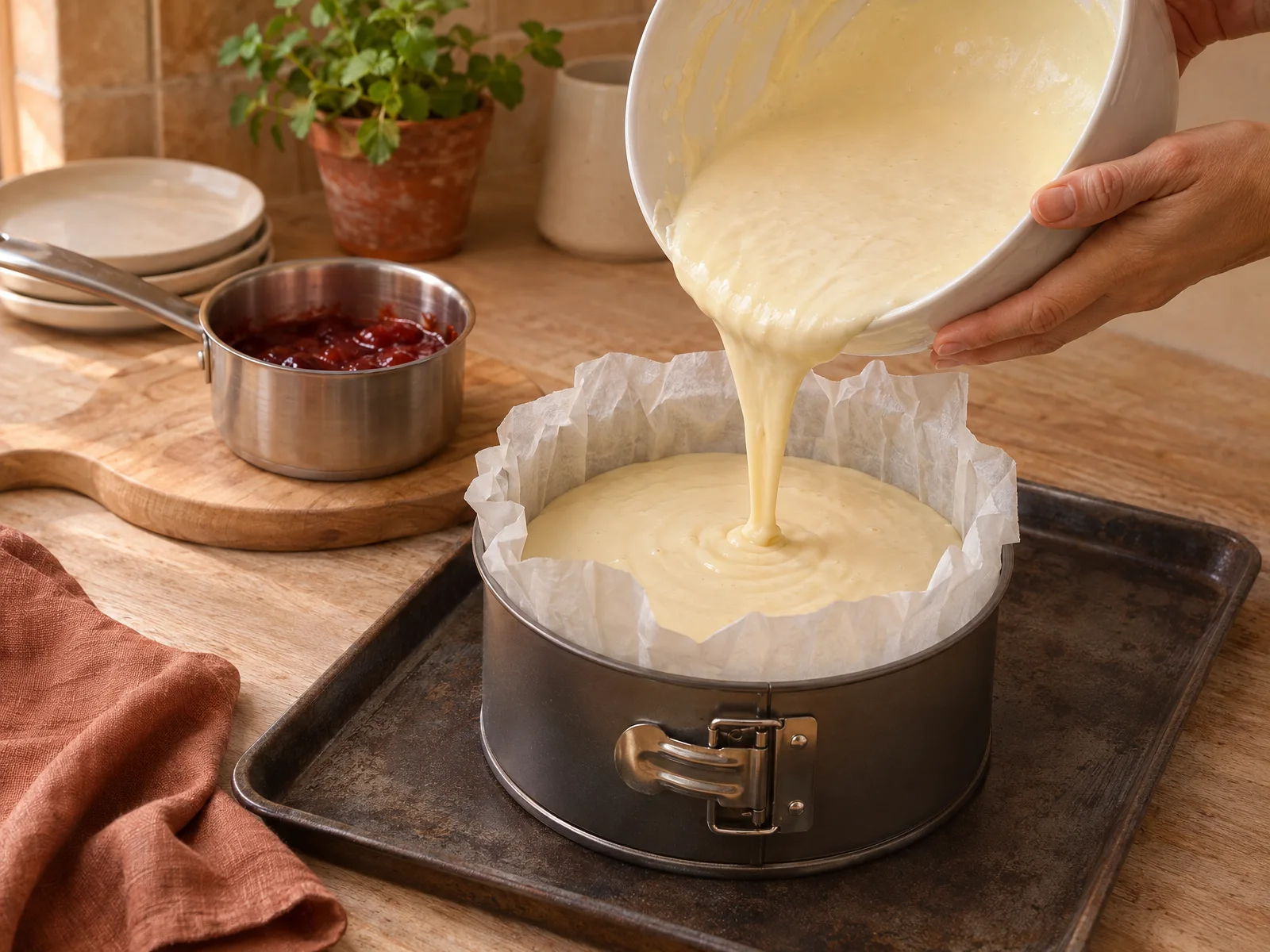
Image generated with AI.CiberCuba - Pour the mixture into the lined mold and give the tray a few gentle taps to break large bubbles. Do not add the guava yet: it goes at the end, with the cake cold, so the toasting is visible and the interior remains silky.
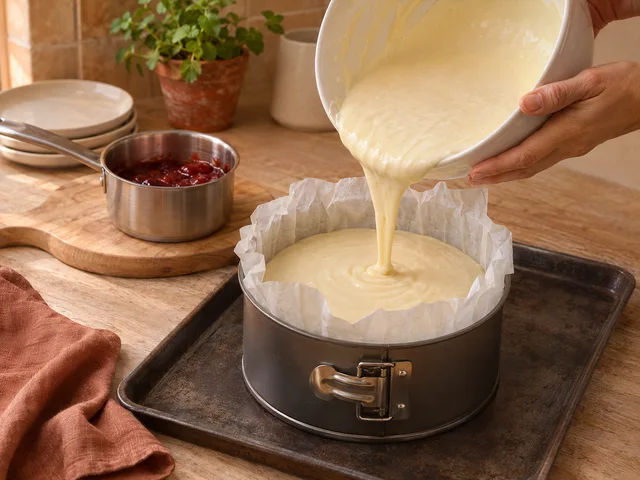
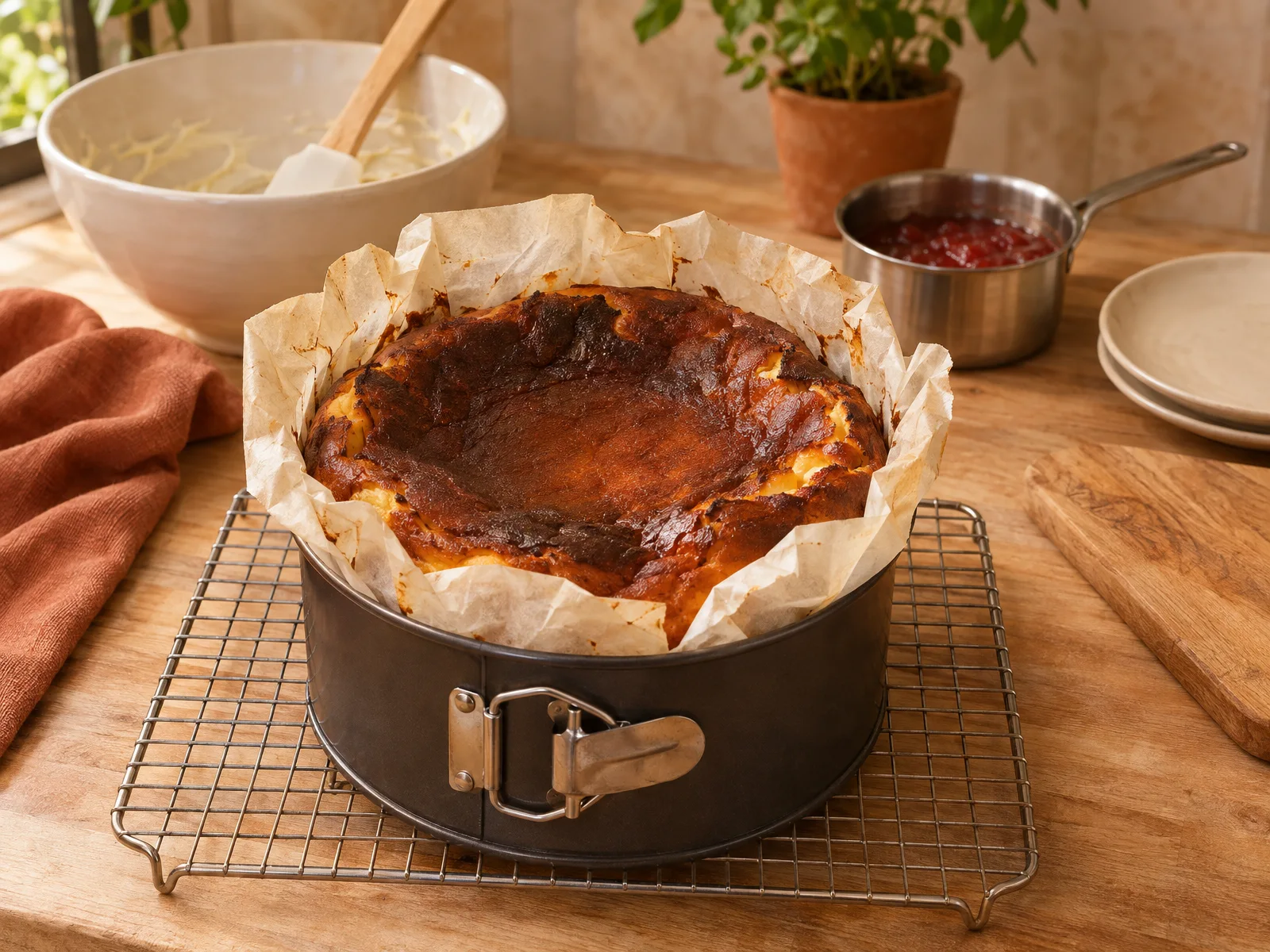
Image generated with AI.CiberCuba - Bake in the middle zone of the oven for about 40-50 minutes. The surface should be a deep toasted brown, with dark spots, without reaching dry charcoal; the edges firm, and the center must wobble like jelly when moving the mold slightly, but not look liquid or raw. Do not pierce it with a skewer: that test does not work for this cake. If the surface darkens too early and the interior remains liquid, cover it with aluminum foil towards the end without letting it touch the cake.
- Take the cake out of the oven: it will have risen and then fallen, forming irregular edges and folds, which is normal. Let it cool in its own mold on a rack for 1-2 hours, until it loses strong heat. Then cover it and refrigerate for at least 4 to 6 hours, preferably overnight, so it sets.
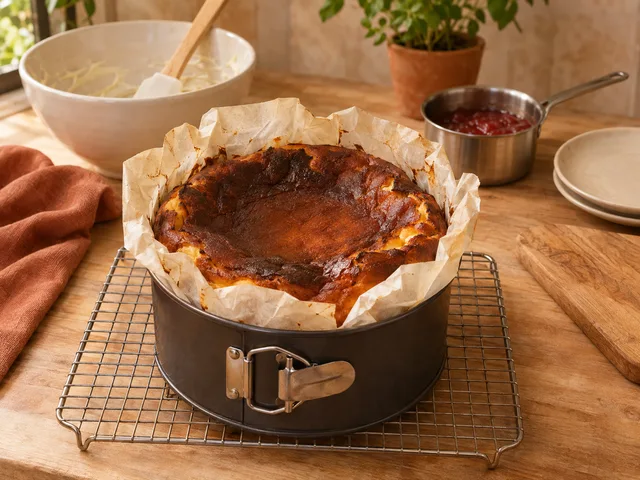
Image generated with AI.CiberCuba
Topping and assembly
- Gently heat the guava jam in a small saucepan, just enough to be able to spread it; if it is very solid, add 1-2 tablespoons of water. Add the lemon juice, if using, and stir. It must not become liquid. Remove from heat and let it reach room temperature. If you use guava paste, cut it into cubes and heat it with just enough water to form a thick and smooth compote.
- Unmold the cold cake and remove the paper carefully. Spread a thin layer of red guava over the center of the surface, leaving a ring of toasted crust visible around it. Do not cover it entirely or with a thick layer, as the characteristic finish is lost.
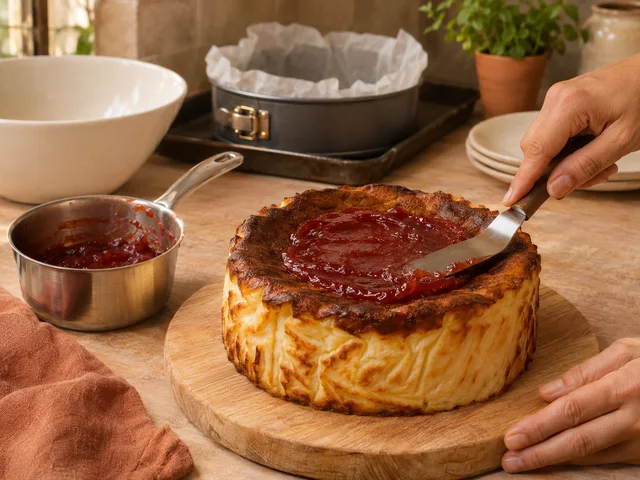
Image generated with AI.CiberCuba - Cut into portions with a long, clean, hot knife, drying it between cuts, so the clear cream of the interior and the red guava on top are well seen. If you want it creamier, let it sit 10-15 minutes at room temperature before serving, and keep the rest in the refrigerator.