Recipe
Sweet Chayotes Stuffed with Cream and Almonds
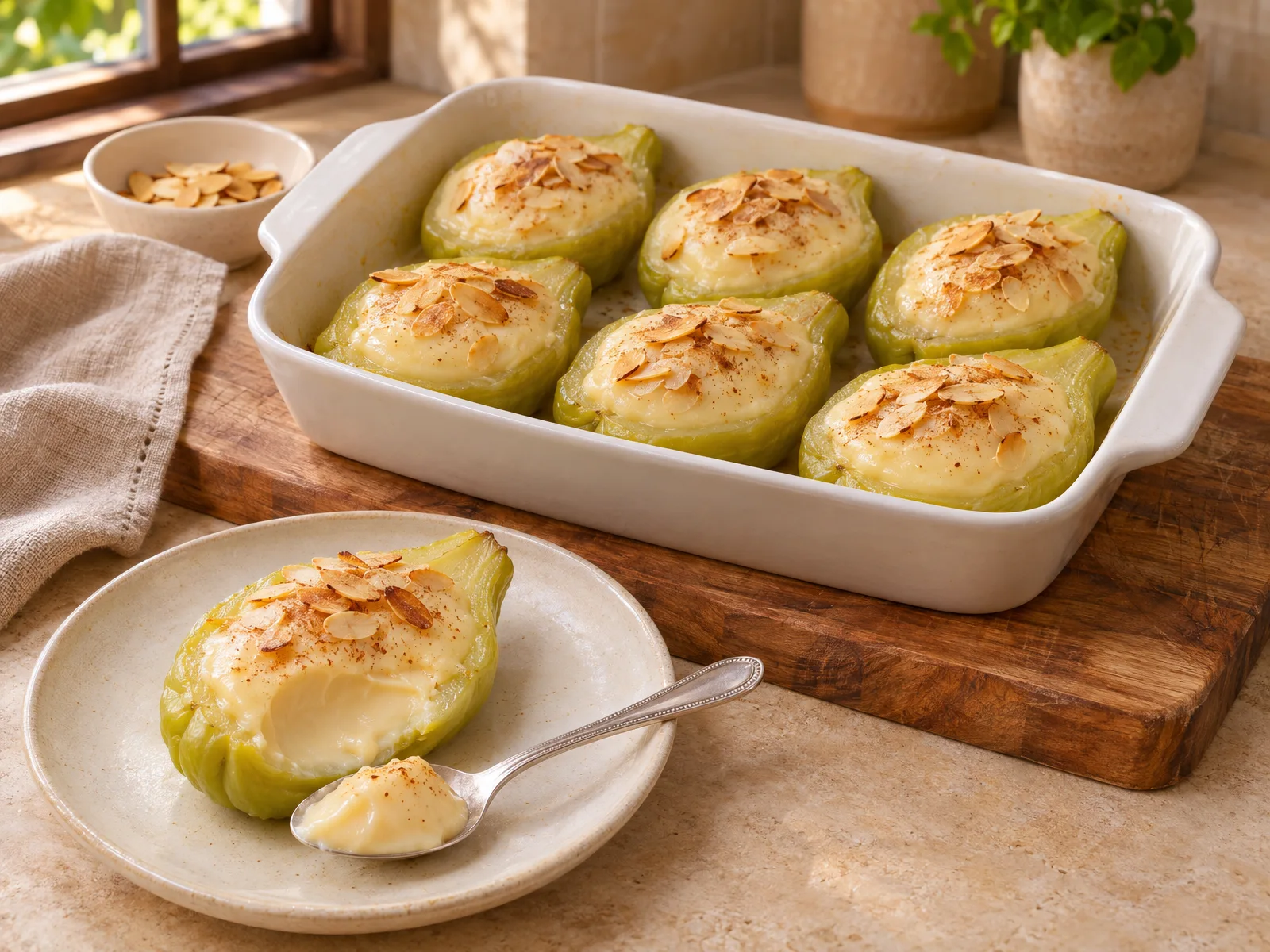
Chayote halves stuffed with a cream made from their own pulp, vanilla, and lemon, topped with sliced almonds and baked until golden.
- Preparation30 min
- Cooking1 h 10 min
- Total time2 h
- Servings6 halves (6 small servings)
- DifficultyMedium
Chayotes almost always end up in salads, soups, or stews, but their mild flavor and tender texture also pair very well with sugar, vanilla, and lemon. This recipe is based on the Stuffed Chayotes that Nitza Villapol and Martha Martínez collected among the desserts in Cocina al minuto (1956), a documented example of how this vegetable also had its place on the Cuban sweet table.
Our version is our own adaptation: we specify exactly how much cooked and well-drained pulp goes into the cream, adjust the sweetness, use cinnamon lightly, and finish with sliced almonds golden in the oven. The result is six green halves with an ivory-colored creamy filling, ideal for an afternoon snack or a family Sunday.
Ingredients
Check off the ingredients you have.
Chayotes
Cream
Finishing
Method
Chayotes
- Wash the chayotes and cut them in half lengthwise, following the groove. If they release a sticky sap, use gloves or wash your hands immediately.
- Place the halves in a wide pot, cover with water, and bring to a boil. Reduce to medium-low heat and cook with the lid slightly ajar for 20 to 30 minutes, depending on size, until a knife enters the pulp without resistance but the skin remains firm. Avoid a strong boil so they do not break.
- Remove them with a slotted spoon and place them cut-side down in a colander or rack for 10 minutes to release water and cool slightly.
- Remove the seed if it is in the way (if it is tender, you can chop it with the pulp). With a spoon, carefully scoop out the pulp, leaving a wall of 6 to 8 mm so the shells hold the filling. Place the shells cut-side down on paper towels.
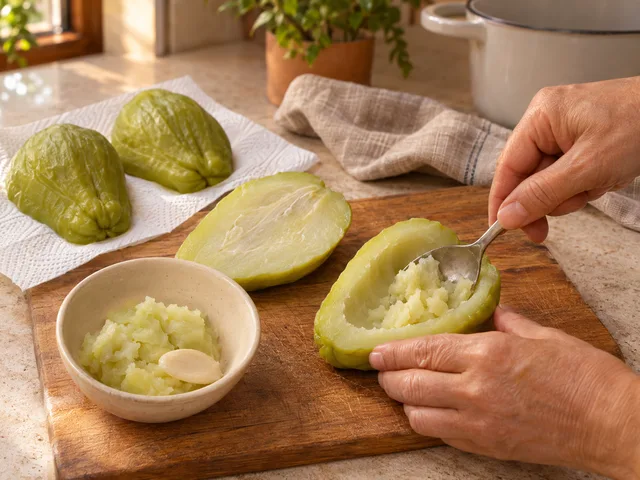
Image generated with AI.CiberCuba
Pulp
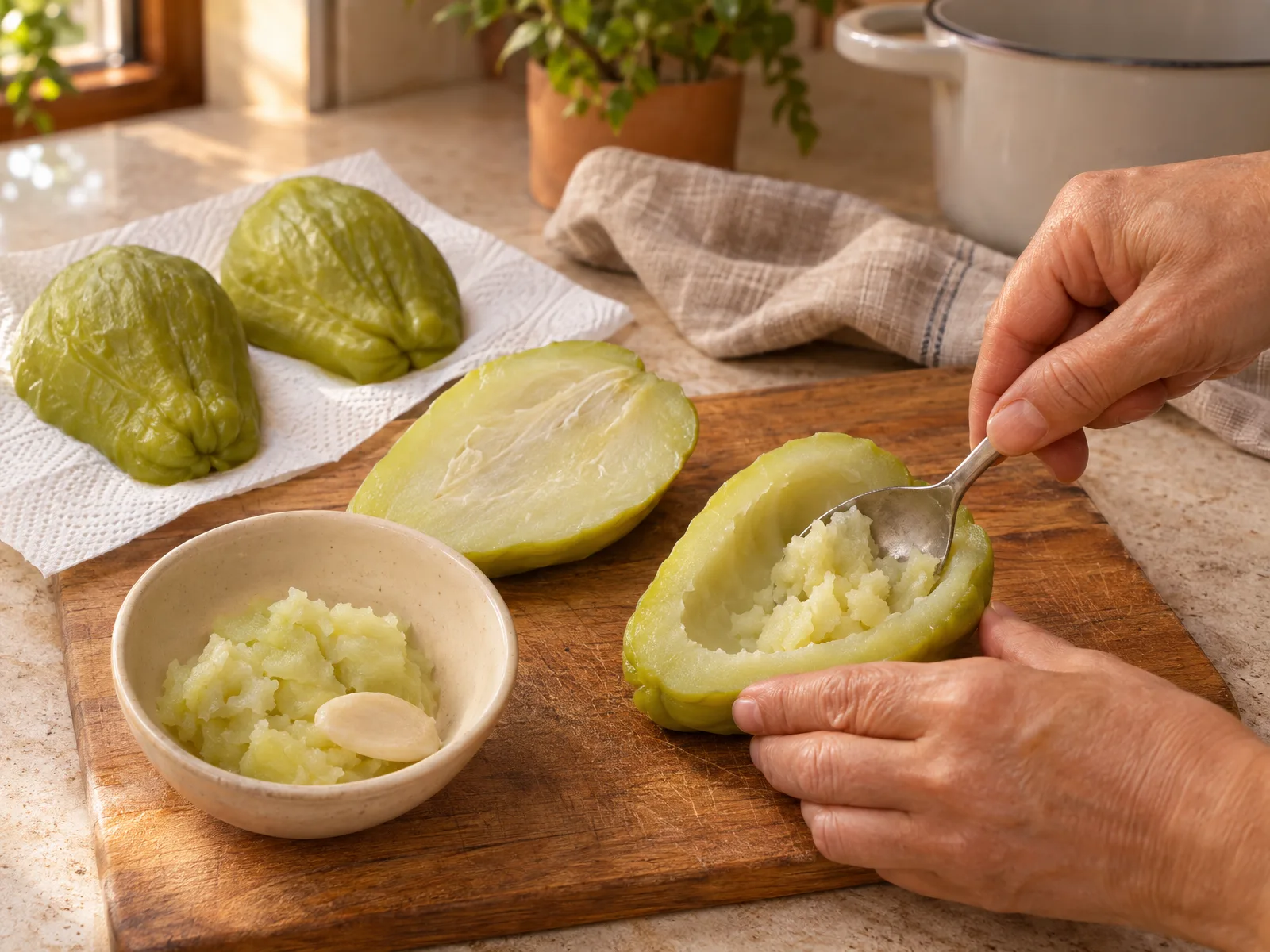
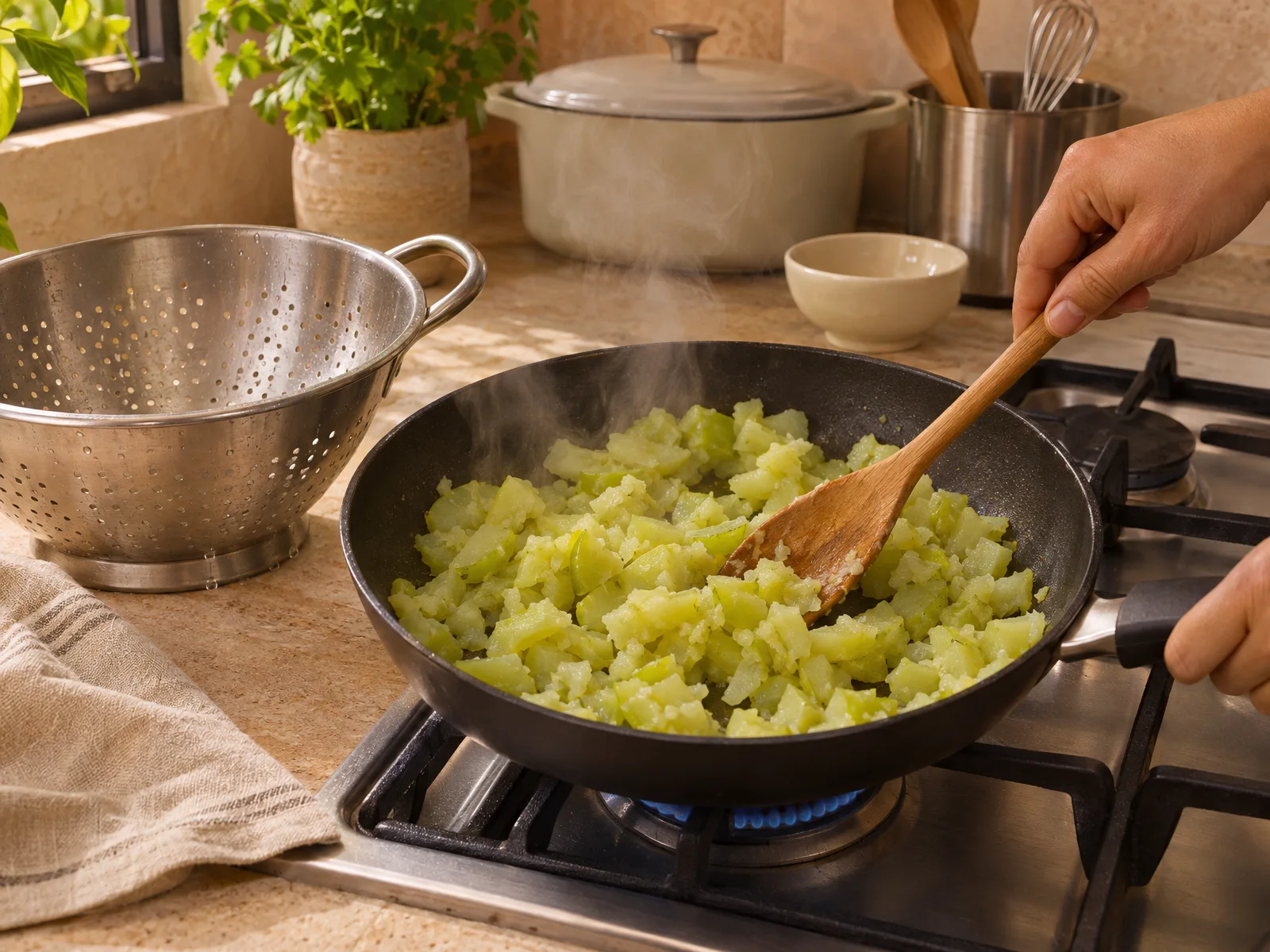
- Transfer the pulp to a colander and let it drain for 10 minutes, pressing gently with the spoon. Chop it coarsely and dry it in a 24 cm non-stick skillet over medium heat for 5 to 8 minutes, stirring, until no liquid remains at the bottom.
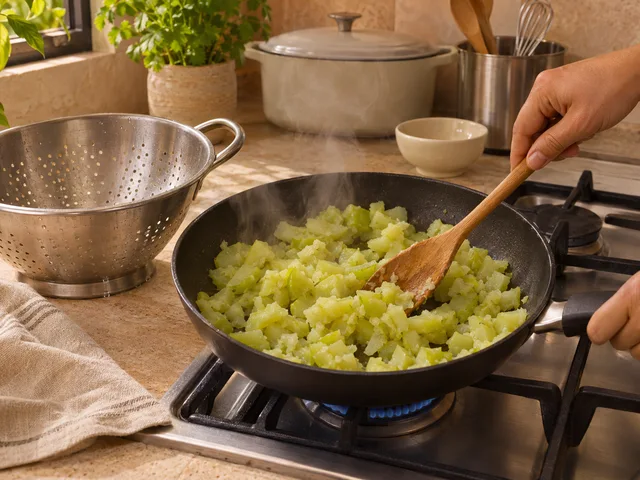
Image generated with AI.CiberCuba - Weigh the pulp: aim for about 400 g (between 350 and 400 g is fine). Mash it with a fork or blend for a few seconds in a blender until you obtain a purée with some texture, never liquid.
- If using raisins, soak them in hot water for 10 minutes, drain them, and dry them with paper.
Cream
- In a 2-liter saucepan, off the heat, mix the sugar, cornstarch, salt, and ¼ teaspoon of cinnamon with a whisk. Add the cold milk gradually and then the yolks, beating until no lumps remain.
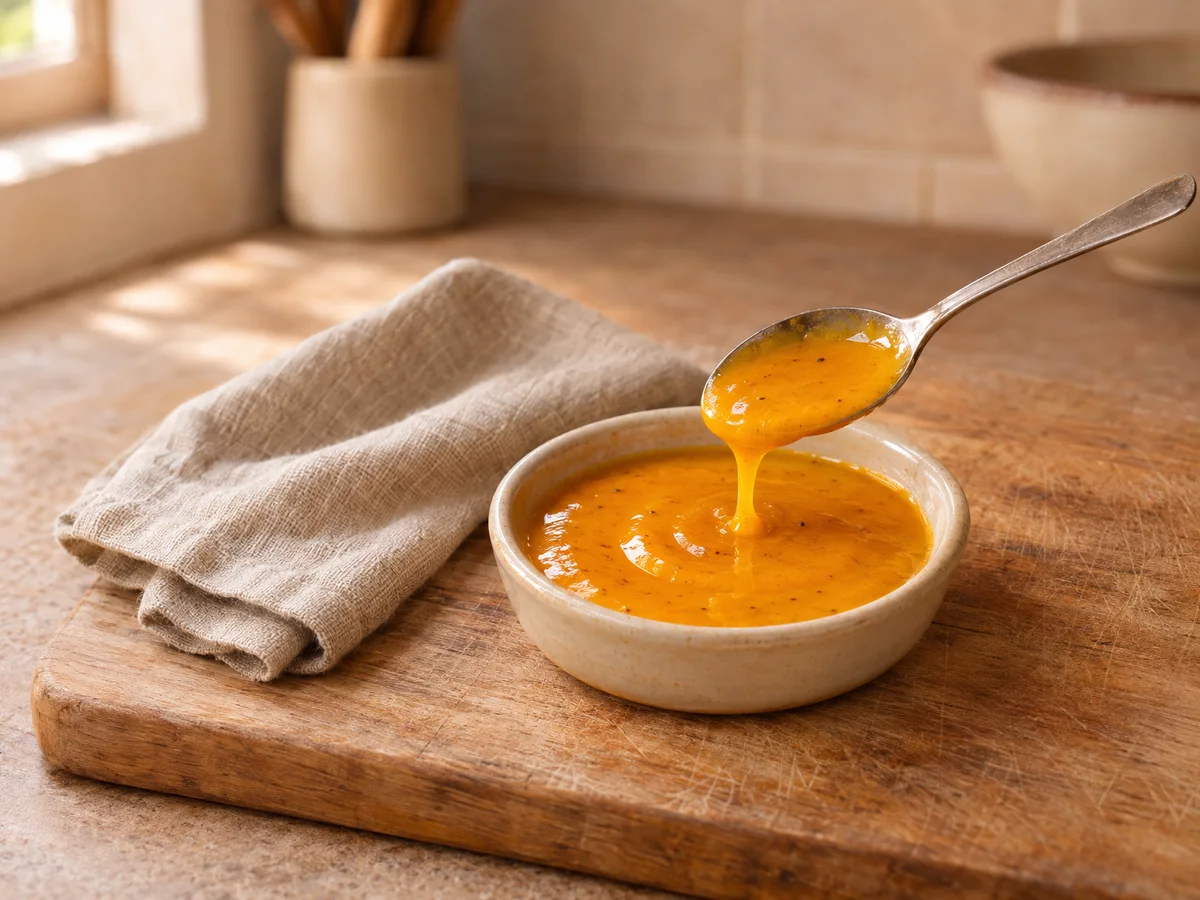
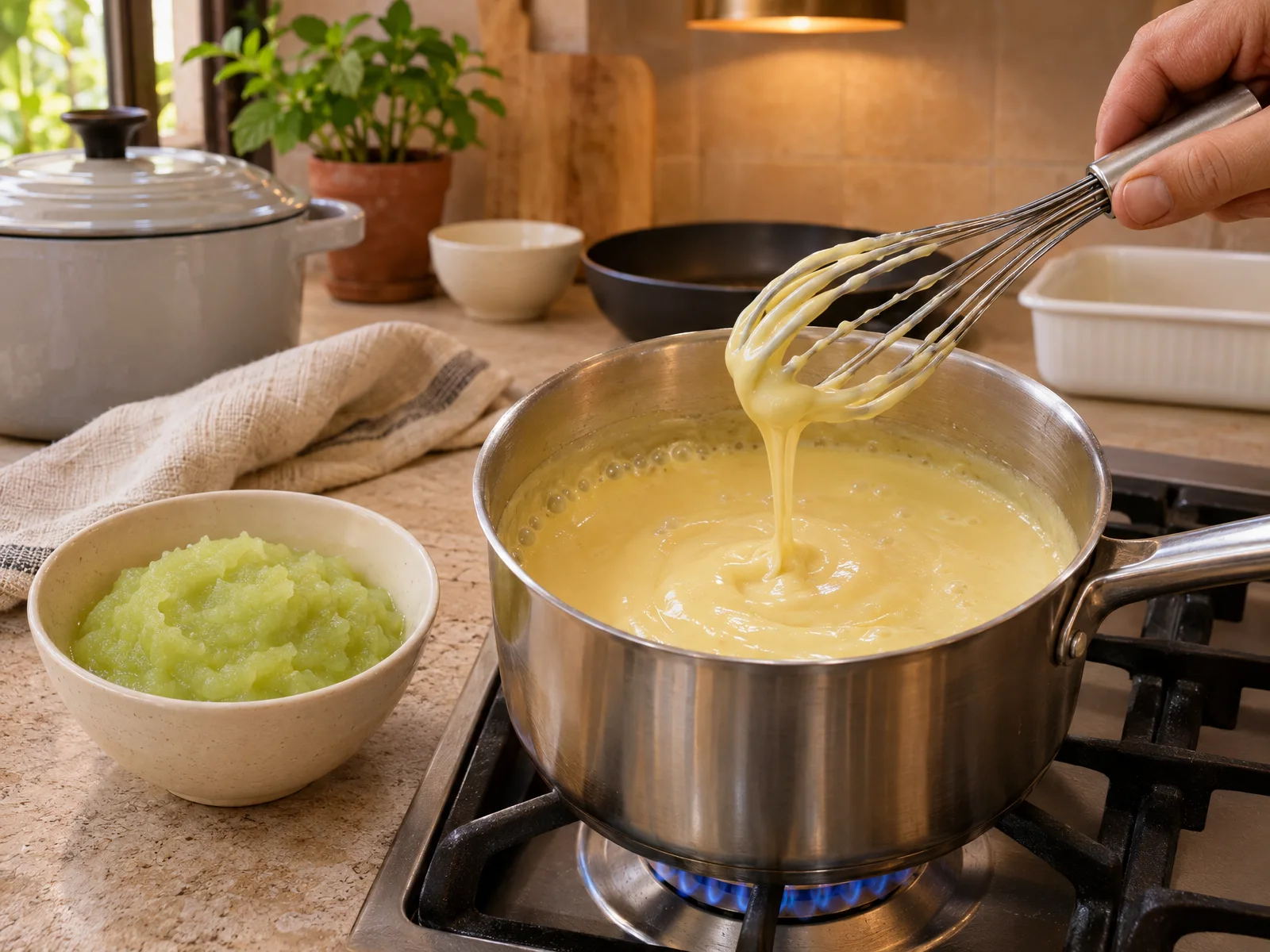
- Cook over medium-low heat, stirring constantly and scraping the bottom, for 5 to 7 minutes, until it thickens and comes to a boil. Let it bubble gently for 1 minute more so the cornstarch cooks: it should be like a thick pastry cream.
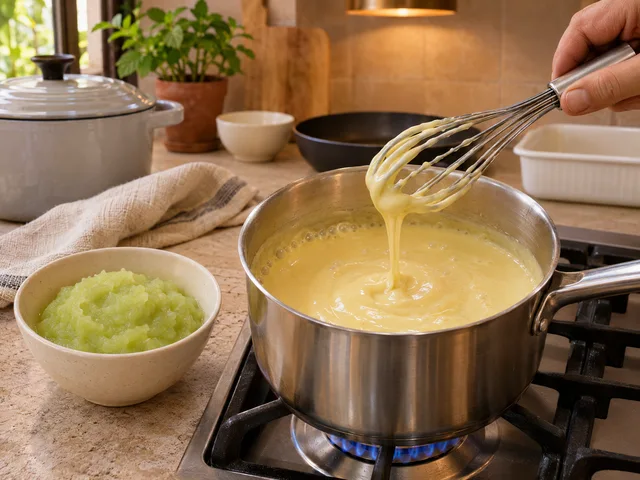
Image generated with AI.CiberCuba - Incorporate the chayote purée and cook over low heat for 3 to 5 minutes, stirring, until the mixture thickens again and, when you run the spoon along the bottom, you see the pan for a couple of seconds. Remove from heat and add the vanilla, lemon zest, and raisins if using. Taste and adjust sugar if necessary.
- Preheat the oven to 200 °C (400 °F) with the rack in the upper-middle position.
Filling and Baking
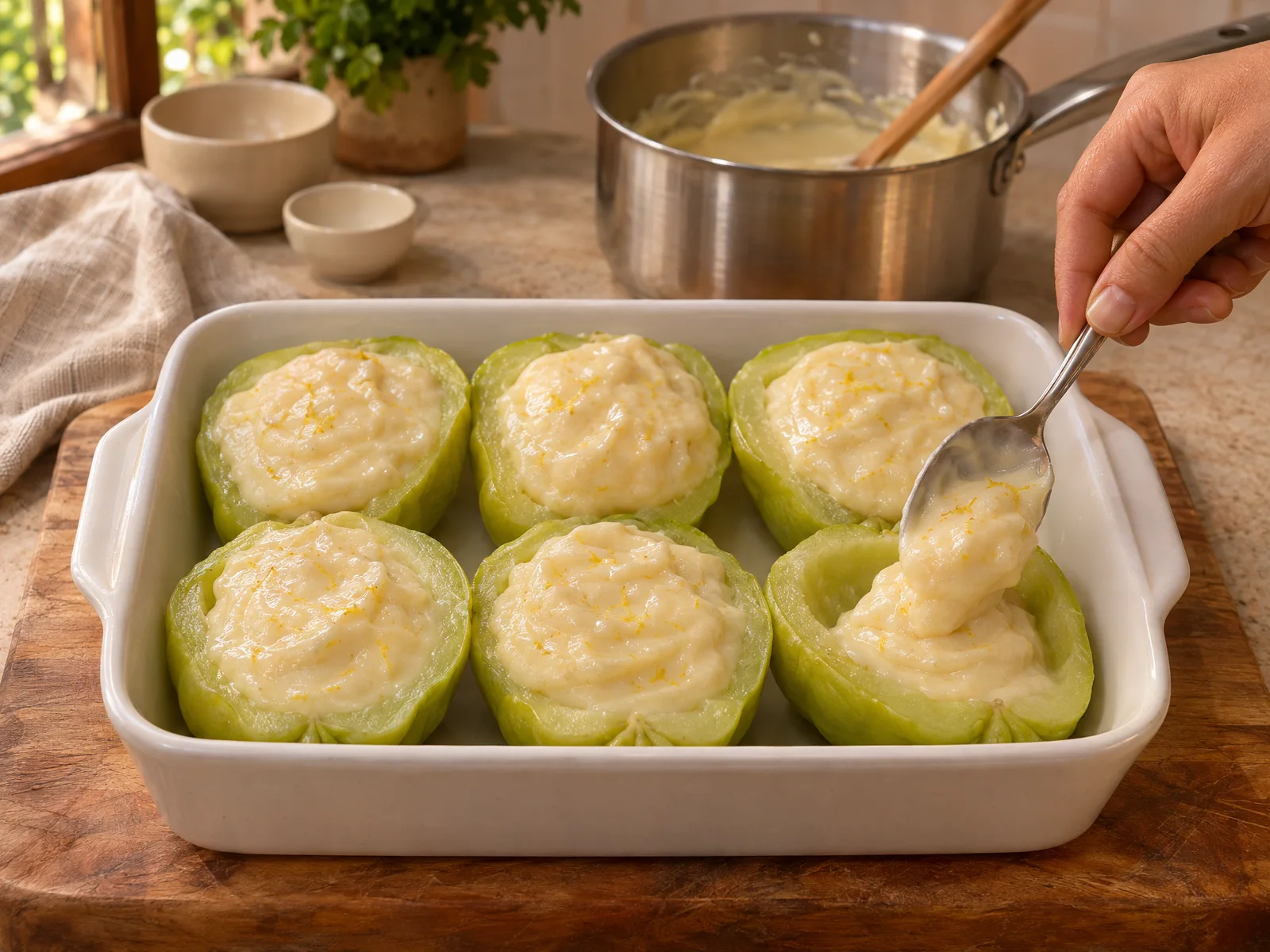
- Dry the inside of the shells with paper and place them snugly together in a baking dish about 20 x 30 cm. If any wobble, cut a very thin slice from the base without piercing it. Fill each half with about 120 g of cream, forming a slight mound.
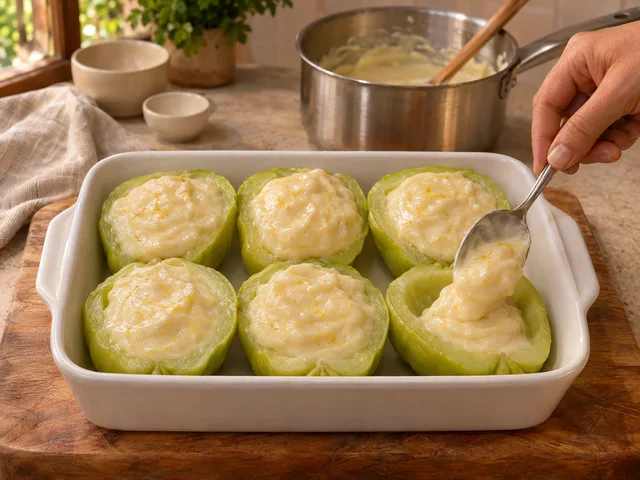
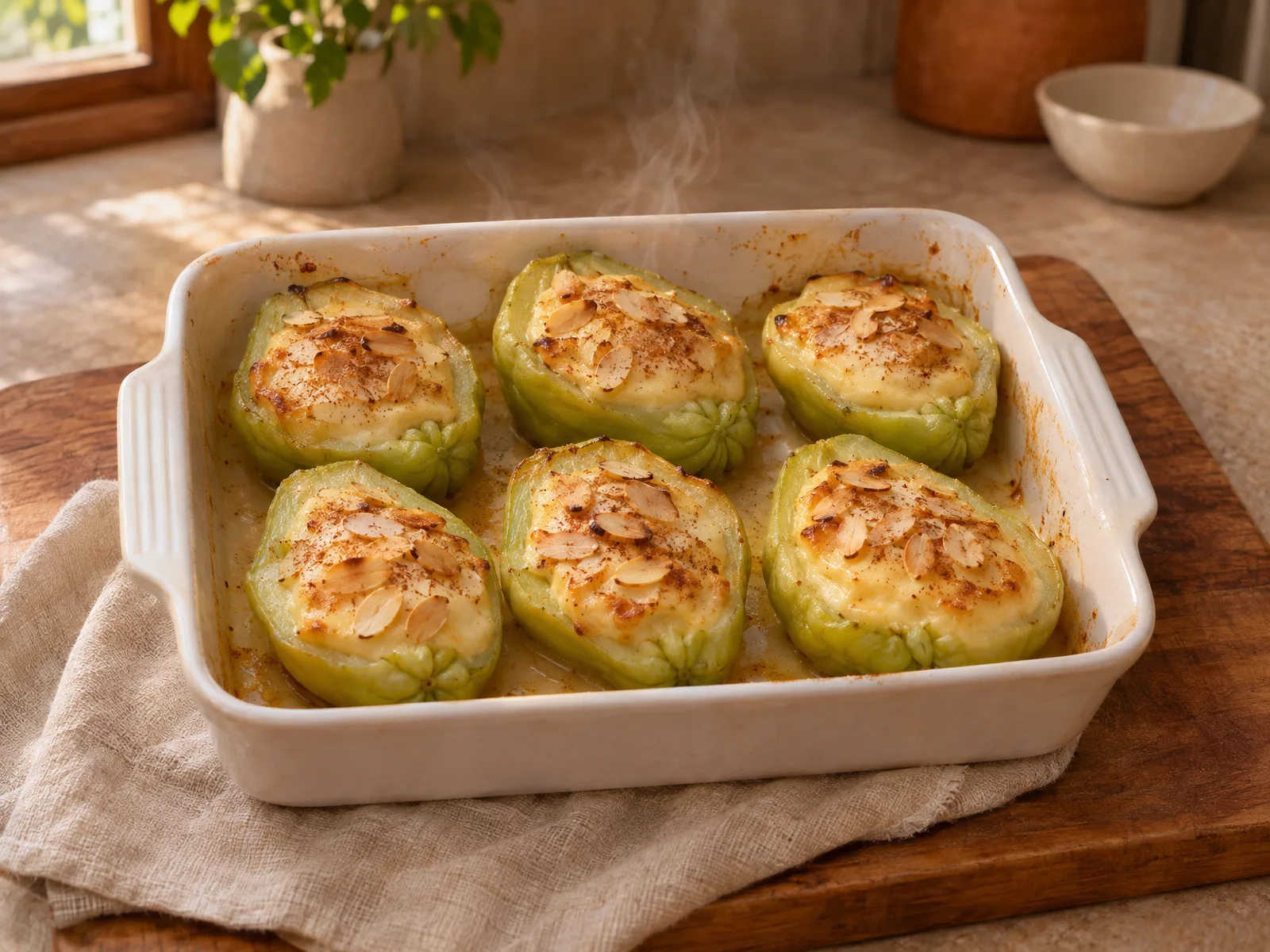
Image generated with AI.CiberCuba - Distribute the sliced almonds on top (about 6-7 g per half), pressing lightly so they adhere, and sprinkle a very discreet pinch of cinnamon.
- Bake for 15 to 18 minutes, until the almonds are golden and the edges of the filling take on a light golden tone. If the almonds do not brown, place the dish under the broiler for 1-2 minutes, watching closely without leaving it.
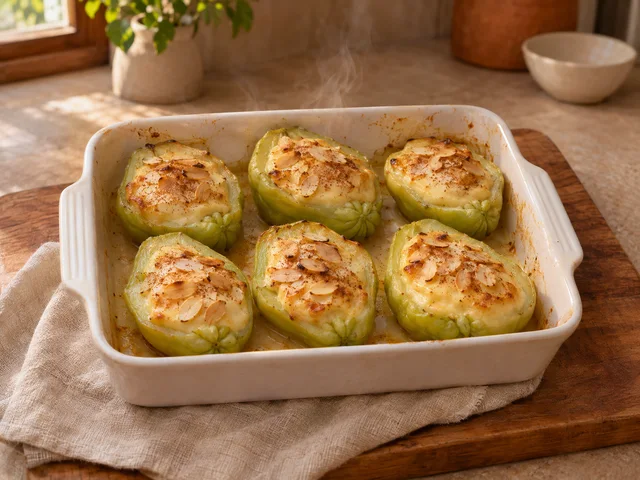
Image generated with AI.CiberCuba - Let rest for 10 minutes before serving. They are eaten warm or, if preferred, refrigerated for a couple of hours.